A little paw licking is grooming. PetMD on allergies, infection, and the swelling or limp that means go in soon.
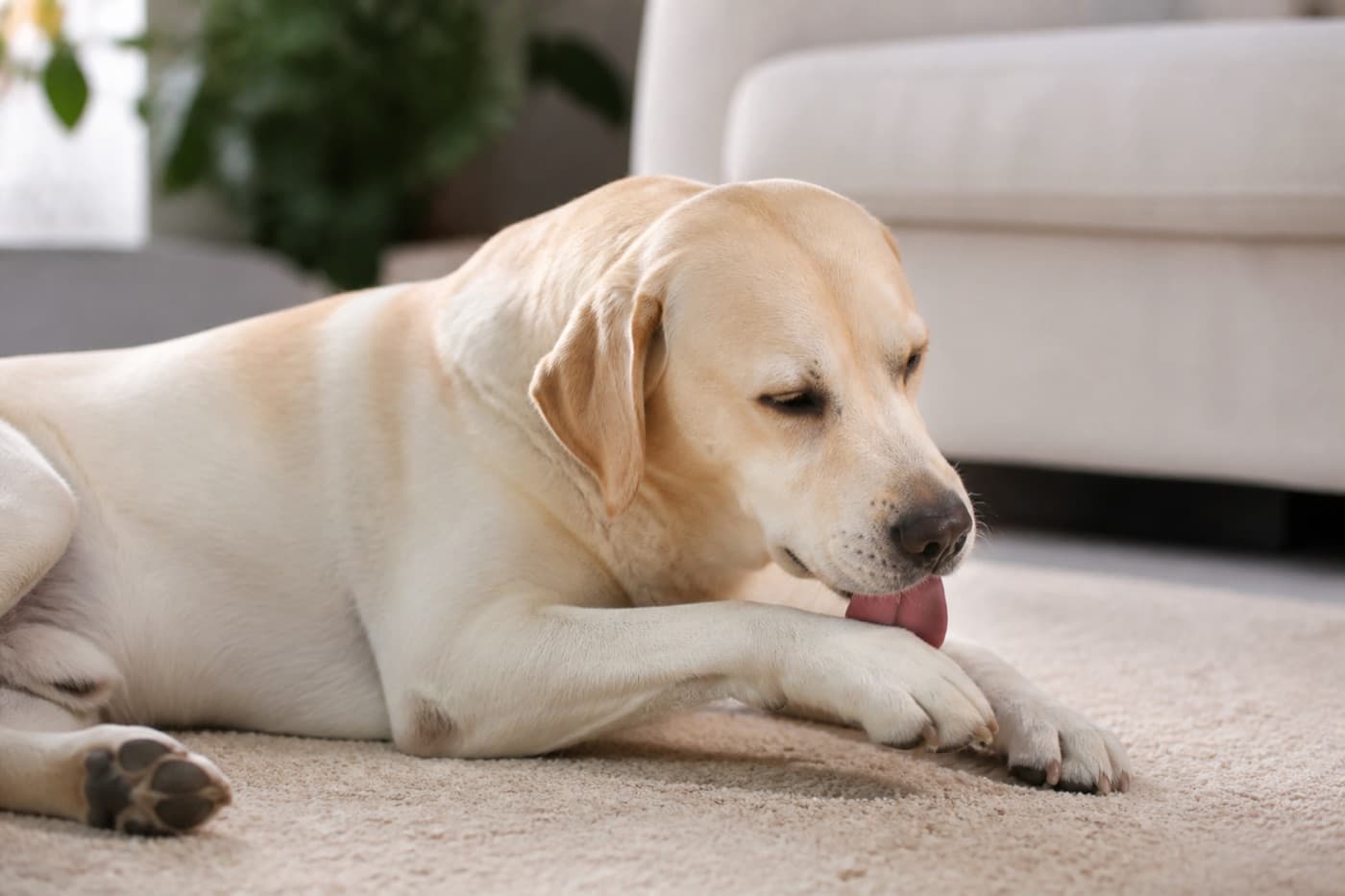
A little paw licking is grooming. PetMD says dogs also lick to settle or to clean a walk off the pads. Licking that does not stop when you call the dog is the version that needs a cause: itch, pain, parasites, infection, or stress.
Look at the skin, not the myth. Rust-red fur, a smell, swelling, or a limp is data for the veterinarian.
PetMD: a lick to clean the pad can be ordinary. Everyday licking can be grooming, exploration, or settling after a walk. Salt, ice melt, burrs, and hot pavement explain a lot of post-walk licking. Check the pads. Rinse if your veterinarian has already told you that is appropriate for that dog.
Licking you cannot interrupt, or licking that harms the skin, is excessive. Time of day helps. A minute after a wet walk is one story. Hours on the same foot at 2 a.m. is another. Film a short clip for the veterinarian if the licking stops in the lobby. A one-time lick after a muddy walk might settle on its own. Licking that lasts hours, that keeps the dog up at night, or that stains the fur rust-red is already a pattern.
Allergies, fleas, yeast, wounds, and things stuck between toes sit at the top of the medical list. Allergies are a common reason for chewed feet. So are fleas, yeast, and a foxtail between the toes. You cannot tell from a photo on this page. Red, stained fur and a smell are clues to bring to the exam, not a home diagnosis.
PetMD warns that leftover licking can become painful pododermatitis. Covering the symptom with a bitter spray without finding the cause lets infection settle in. We will not invent an antihistamine dose. Benadryl questions are a different, easy-to-botch file. Ask the veterinarian who sees that dog before you add a spray, a cone, or a supplement. Do not start a human cream. Persistent licking after you removed the gunk still needs an exam.
PetMD lists habit, boredom, anxiety, and compulsive licking after medical causes are addressed. That order matters. Behavior is not the first guess on a swollen paw. A cone without a diagnosis only hides the feet.
Once the veterinarian has ruled out itch, pain, parasites, and infection, enrichment and a behavior plan can matter. The veterinarian decides whether a behaviorist is next. This page will not invent a hours-of-crate chart or a supplement stack for “anxiety licking.”
PetMD’s clinicians flag bleeding, swelling, limping, pus, or crying when the paw is touched as reasons to go in soon. Those are not “wait for the weekend” signs. Interruptible grooming can be normal. Hours of licking you cannot stop needs a cause. “I’ll try bitter apple first” is the wrong first move on a swollen, smelling, or limping foot.
Book the veterinarian who knows that dog. This page is editorial. See the about page.
PetMD says everyday licking can be grooming, exploration, or settling after a walk. Excessive licking that does not stop when you call the dog is a different list: allergies, fleas, pain, infection, or itch, and sometimes boredom or anxiety. The veterinarian who sees those paws sorts the list.
PetMD’s clinicians flag bleeding, swelling, limping, pus, or crying when the paw is touched as reasons to go in soon. Those are not “wait for the weekend” signs.
Allergies are a common reason for chewed feet. So are fleas, yeast, and a foxtail between the toes. You cannot tell from a photo on this page. Red, stained fur and a smell are clues to bring to the exam, not a home diagnosis.
Covering the symptom without finding the cause lets infection settle in. PetMD notes that leftover licking can become pododermatitis. Ask the veterinarian before you add a spray, a cone, or a supplement.
Salt, ice melt, burrs, and hot pavement explain a lot of post-walk licking. Check the pads. Rinse if your veterinarian has already told you that is appropriate for that dog. Persistent licking after you removed the gunk still needs an exam.
No. Grass eating is usually a different habit. See the grass guide if that is the actual search. Paw licking is an itch-and-pain file first.
A one-time lick after a muddy walk might. Licking that lasts hours, that keeps the dog up at night, or that stains the fur rust-red is already a pattern. Book the veterinarian who knows that dog.
Reader notes are not veterinary advice. If an animal is unwell, call the veterinarian who sees them.
Be the first to leave a note on this guide.