Window chatter is a common hunting frustration sound at birds. It is usually normal. Dental pain can change mouth noises.
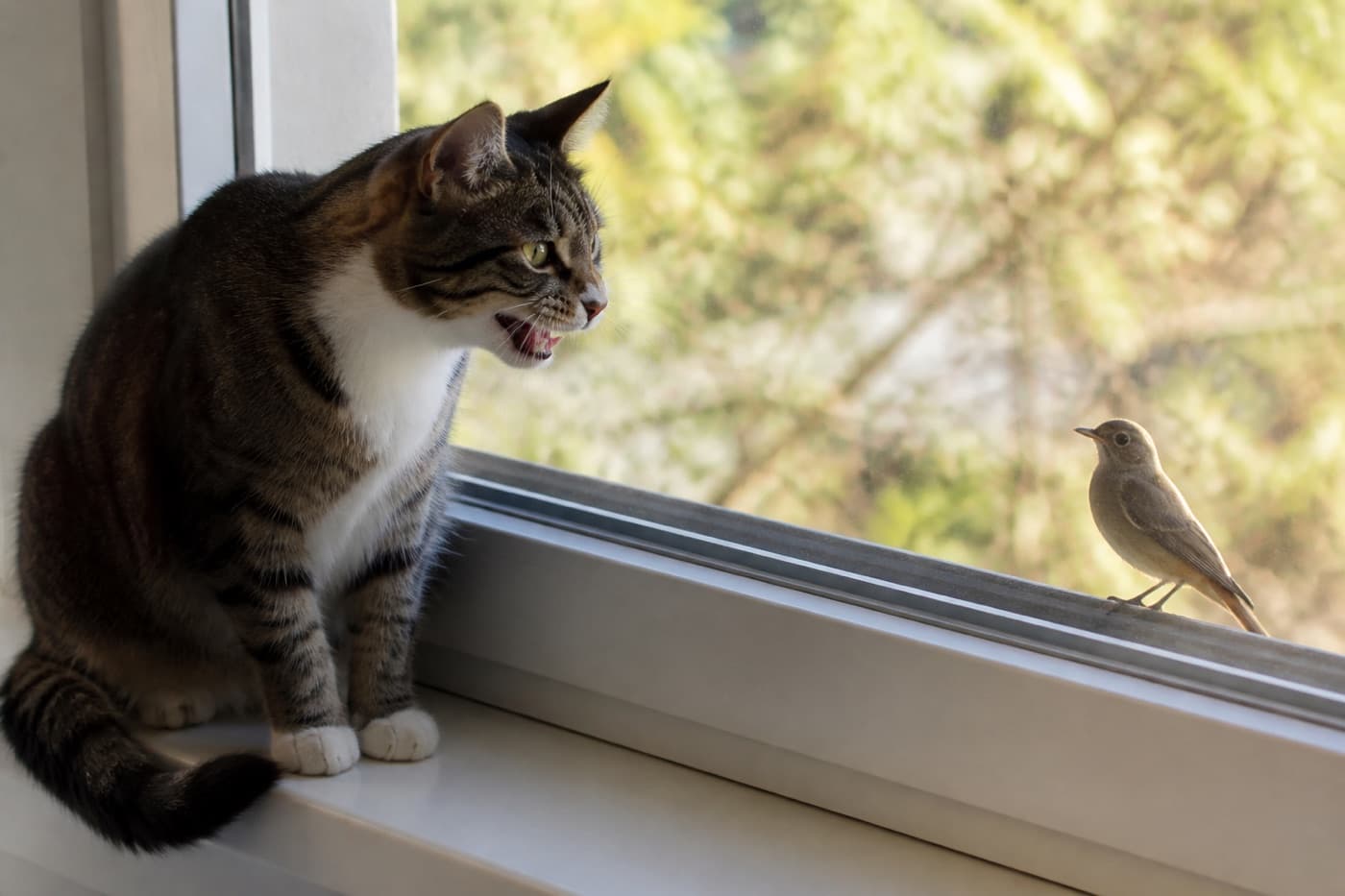
Cats chatter at unreachable prey, often through a window. PetMD treats the rapid jaw click as hunting excitement and frustration, not a random glitch.
Brief window episodes are common. Jaw noise plus pawing at the mouth is a dental rule-out, not a bird problem.
PetMD’s sounds guide puts chattering with twittering: a low smacking or clicking from rhythmic jaw movement, often while the cat stares at birds or squirrels it cannot reach. Chirps may ride along. The mix reads as focus plus frustration. The glass shows the prey and blocks the pounce.
The same page notes domestic cats keep strong hunting instincts even when bowls are full. A well-fed indoor cat can still run the motor pattern at a feeder bird. That is biology, not a feeding failure. Related outdoor leftovers show up when the door opens: why cats bring you dead animals.
Short chatter at the window, then a stretch or a nap, is ordinary. Offer a wand session afterward so the hunt gets a legal ending. Zoomies after a long stare are the same energy dump in bigger form: why cats have zoomies.
Crepuscular peaks put more bird traffic and more cat focus at dawn and dusk. For the clock, read are cats nocturnal. Motion in dim light still grabs them. Zero light does not. See can cats see in the dark.
Do not open the door as a chatter cure by default. Indoor enrichment keeps the bird and the cat safer. A quiet post-hunt purr on your lap is ordinary downtime language: why cats purr.
Window chatter aimed at birds is hunting. Jaw movement with pawing at the mouth, drooling, dropping food, foul breath, or face rubbing is dental or oral pain until a veterinarian says otherwise. Do not wait for the next flock. Book the exam.
Sudden chatter with disorientation, collapse, or full-body events is also a clinic day, not a bird day. This page is editorial. The about page is the author URL.
PetMD treats chattering and twittering as prey-related sounds when a cat sees something to hunt but cannot reach it, often birds or squirrels through a window. Excitement, focus, and frustration sit in the same moment.
Related, not identical. PetMD describes chirps as short high sounds of interest. Chattering is a rapid jaw-smacking or clicking sound, often without much voice, while the cat stares at prey.
Yes. Brief episodes at the window are common in well-fed indoor cats. The hunting brain still fires. It is not proof the cat is starving.
Not as a default. Outdoor access adds trauma and wildlife cost. Offer wand play that ends in a catch. See why cats bring you dead animals if outdoor hunting is already happening.
Window chatter at birds is usually hunting. Chattering or jaw movement paired with pawing at the mouth, drooling, bad breath, dropping food, or face rubbing is a dental or oral-pain visit. Call the veterinarian.
Some popular theories say mimicry. PetMD’s sounds page emphasizes excitement and frustration at unreachable prey. Either way, the owner job is enrichment, not decoding a dialect.
No. Chatter is a hunting voice at visible prey. Dim-light vision is a separate sense guide. See can cats see in the dark.
Reader notes are not veterinary advice. If an animal is unwell, call the veterinarian who sees them.
Be the first to leave a note on this guide.