Gifted prey is hunting behavior shared with the household, not a spite message. Keep vaccines current and manage outdoor access.
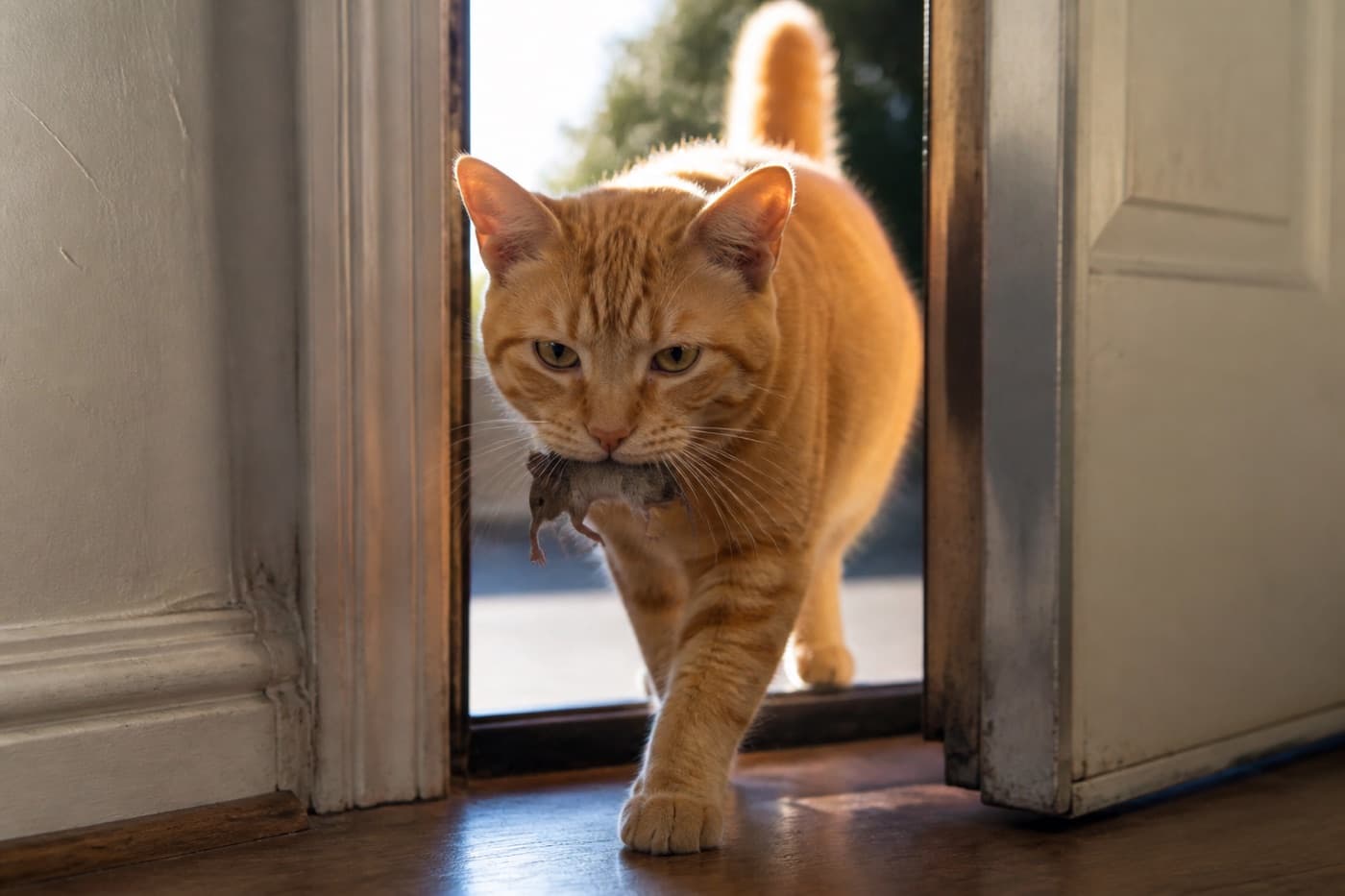
Cats bring dead animals as hunting leftovers: sharing, stashing, or play. PetMD frames the behavior as instinct toward family and safe territory, not a funeral oration.
Keep outdoor hunting down if you can. Parasites and rodenticides travel with prey. Indoor toys can take the same delivery job.
PetMD lists the usual theories without turning them into poetry. Queens bring prey to kittens as teaching and provisioning. Your cat may treat you like family and drop the catch nearby. Another line: the house is a safe core territory, so the prize comes home where other predators will not steal it. A third: play. Cats often bat prey before eating. Delivering a toy or a mouse can be an invitation to join.
Indoor cats run the same motor pattern with fabric mice. The meow-and-drop at your feet is the announcement. That is communication, not a bill for rent. Related social files include why cats meow and why cats lick you.
PetMD warns that rodents can carry tapeworms and may have eaten rodenticide. Either problem can make the cat sick. Do not shrug and let the cat finish wildlife as a “natural diet.” Ask your veterinarian about parasite prevention if hunting happens.
Bird numbers take a hit from free-roaming cats. PetMD cites American Bird Conservancy estimates in the billions of birds killed yearly in the U.S. That is conservation math, not a guilt sermon. It is a reason to prefer indoor life or supervised outdoor time.
Keep the cat indoor when you can. If there is outdoor time, use supervision, a sturdy enclosure, or a leash. Breakaway collars with a bell or bright cover help some prey notice the cat. They reduce kills. They do not erase them.
Give the hunt a legal ending: wand toys that mimic prey, a catch, then a meal. Pick up the wildlife with gloves if needed. Do not punish the delivery. Thank the instinct by moving it onto toys. This page is editorial. The about page is the author URL.
PetMD treats prey “gifts” as hunting leftover: sharing with family, stashing prey in a safe core area, or inviting play. Indoor cats may deliver toys the same way. It is instinct and teaching-style sharing, not a tribute speech.
One theory on PetMD is that cats practice the mother-kitten pattern of bringing prey to share. Another is safe storage near trusted people. You do not have to eat the mouse to understand the file.
Keep the cat indoor or supervise outdoor time. Bells and brightly colored collars help some birds notice the cat. They are not perfect. Enrichment with wand toys gives the hunt a legal ending.
Yes. PetMD notes rodents can carry parasites such as tapeworms and may have eaten rodenticide. Do not let the cat finish wildlife snacks. Talk to your veterinarian about prevention if the cat hunts.
PetMD cites American Bird Conservancy figures on bird kills by cats. Wildlife impact is a real outdoor cost. Indoor life plus play is the usual mitigation.
Often yes: carry, announce, drop at your feet. Reward the delivery with a short play session using a toy, not with panic. That keeps the habit on fabric mice.
No. Punishment does not delete prey drive. It can make the cat hide kills where you will not find them until later. Redirect the hunt.
Reader notes are not veterinary advice. If an animal is unwell, call the veterinarian who sees them.
Be the first to leave a note on this guide.