Adult cats meow mainly at humans, not other cats. Hunger, greeting, and stress are common. When night yowling needs a vet.
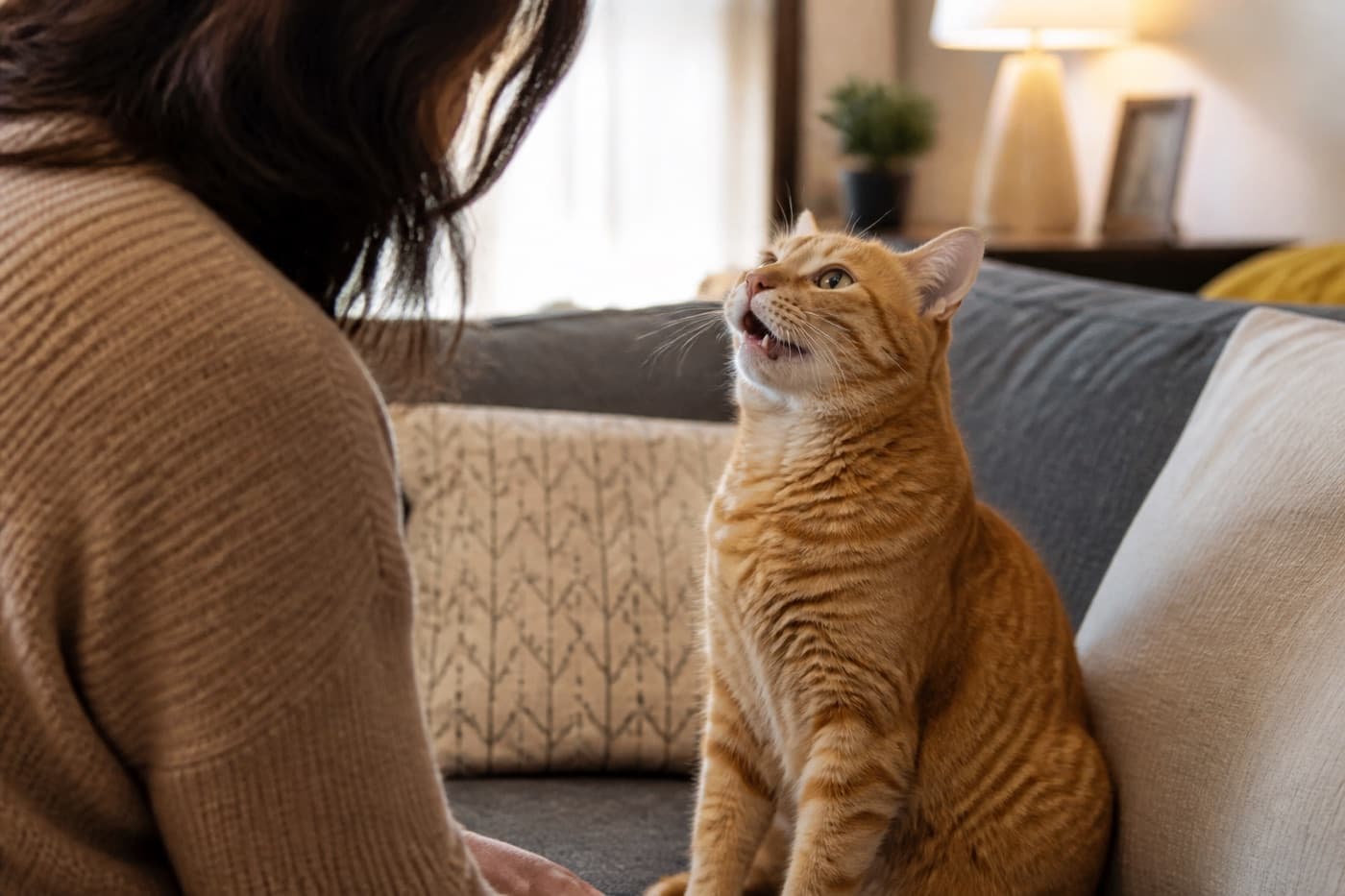
Adult cats mostly meow at people, not at other cats. ASPCA, PetMD, and VCA all treat the meow as a human-directed request: hello, food, door, play, or “something is wrong.”
Kittens meow to their mothers. Adults keep the sound for us because it works. A new night yowl is a medical rule-out before it is a personality story.
ASPCA’s meowing page is the clean line: the meow is how a cat talks to people. Adult cats do not typically meow at each other. Kittens meow when cold or hungry. Once mature, cats drop that kitten call among cats and keep it for humans, because meowing gets results.
VCA says domestic cats developed this vocalization for human interaction. They purr, yowl, growl, and hiss at other cats. The meow is the people tool. PetMD’s sounds page says the same: adult meowing is primarily human-directed. Tone and pitch change with the ask. A soft greeting is not the same file as a harsh, persistent cry.
CFA breed writing treats some cats (Siamese, Japanese Bobtails) as especially conversational. That is breed color, not proof every loud cat is healthy. Conversational meowing sits next to other affection signals CFA lists, such as kneading and slow blinks. For the purr and biscuit versions of close contact, see why cats purr and why cats knead.
ASPCA’s list is practical: greeting, attention, food, and in-or-out requests. Cats left alone for long stretches may meow more for contact. Kitchen meows often train you into snacks. Door meows during an indoor-only transition can last weeks. That is hard, not “spite.”
PetMD adds play invites, frustration, and boredom. Paying every meow with food or a door teaches a louder schedule. Redirect with play before mealtime. Ignore demand meows that have no medical red flags, then reward quiet. Licking and rubbing are quieter social bids. If the tongue is the question, read why cats lick you.
A lifelong twilight pattern plus a rewarded breakfast meow is common. A new loud yowl, restlessness, litter strain, weight loss, extra drinking, or confusion is a veterinarian visit. PetMD lists pain, urinary discomfort, kidney disease, hyperthyroidism, hypertension, cognitive dysfunction, and sensory loss among causes of extra vocalizing. Night is when the house is quiet enough to hear them.
Do not start with a sleep-drug guess from a comment thread. Do not assume “nocturnal breed.” Rule out medical causes, then fix the schedule: evening play, no night buffet, no audience for the dawn demand. This page is editorial. It does not replace the veterinarian who sees that cat. The about page is the author URL.
ASPCA, PetMD, and VCA treat the adult meow as mostly a people language. Kittens meow to their mothers. Adult cats rarely meow at other cats. They keep meowing at us because it works for food, doors, greetings, and attention.
ASPCA says adult cats do not typically meow at one another. They use other sounds (hisses, growls, yowls in breeding season). The everyday meow is aimed at humans.
A lifelong twilight pattern can be crepuscular biology plus a learned breakfast alarm. A new loud yowl, especially in a senior, needs a medical rule-out first: pain, hyperthyroidism, high blood pressure, cognitive change. See are cats nocturnal.
No. PetMD lists pain, urinary discomfort, kidney disease, hyperthyroidism, hypertension, cognitive dysfunction, and sensory loss among medical causes of extra vocalizing. Rule those out before you only change the treat schedule.
Do not pay the meow with an immediate meal every time. Move play and food earlier in the evening. Puzzle feeders help. Scolding still counts as attention. Sudden frantic meowing with other signs is still a vet visit.
CFA breed pages (Siamese, Japanese Bobtail) describe highly conversational cats. Individual cats vary inside a breed. Loud is not a diagnosis by itself.
Call for a new pattern, a harsher sound, night yowling that was not there before, meowing with litter strain, weight loss, extra thirst, or confusion. Night noise that is new in an older cat is not a “nocturnal breed” problem.
Reader notes are not veterinary advice. If an animal is unwell, call the veterinarian who sees them.
Be the first to leave a note on this guide.