Cats often sleep 12-16 hours a day. Predatory rest cycles explain the naps. Sudden sleep-pattern changes deserve a check.
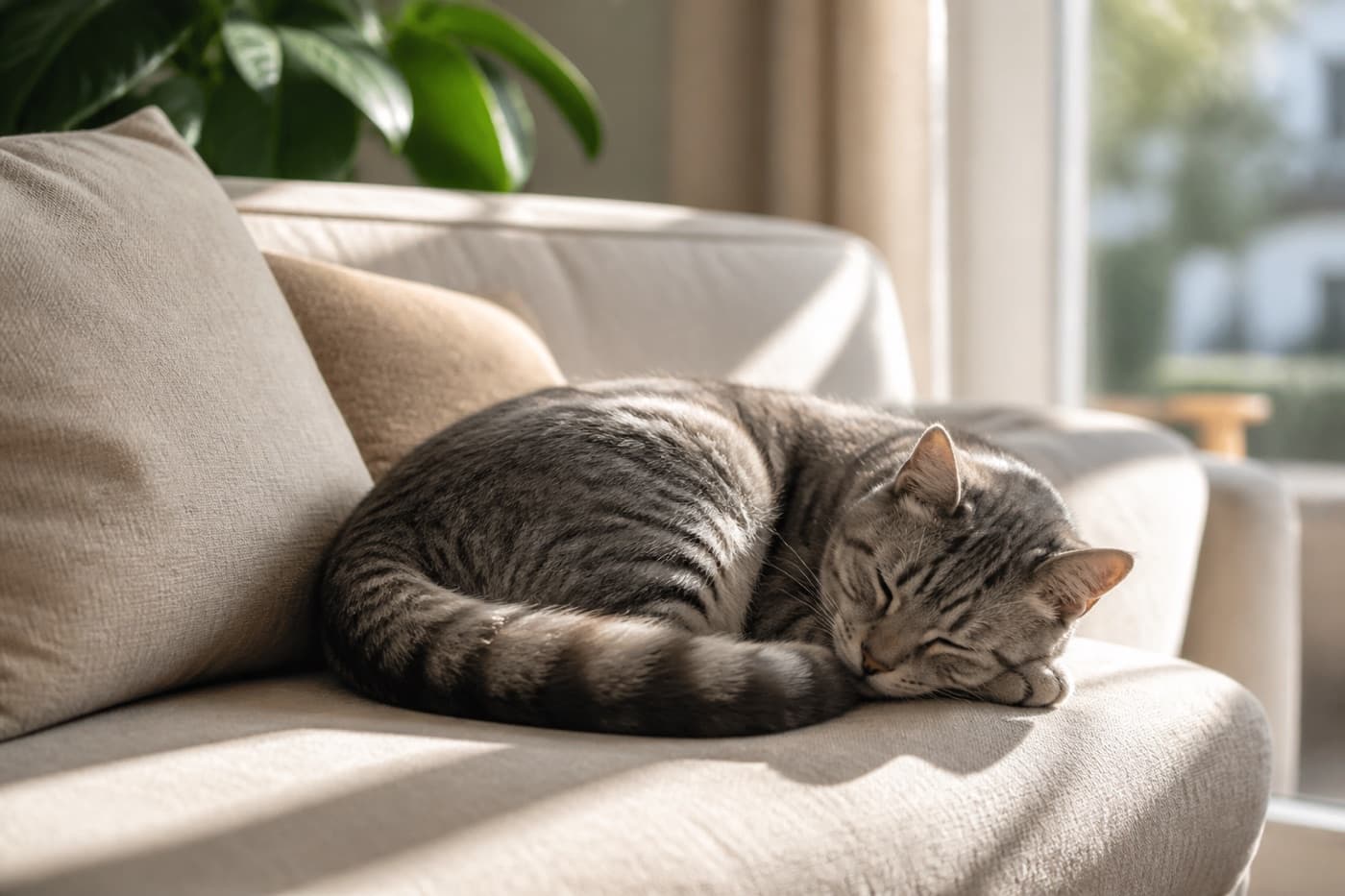
Cats commonly sleep 12 to 16 hours a day. PetMD and VCA both publish that band. It is predator rest between short bursts, not a moral failure.
A change in sleep plus other signs is the clinic question. The raw hour count, by itself, is a weak test.
PetMD says cats typically sleep 12–16 hours a day because hunting, play, and exploration are expensive. Rest keeps them ready for the next sprint. Much of that “sleep” is catnapping in 15–30 minute stretches, light enough to react.
VCA’s owner pages use the same 12–16 hour band. Cats rest in short bursts across the day and night rather than one long human block. Young, healthy cats may still spend about two-thirds of the day in rest mode. That is the published normal, not a diagnosis.
Cats are crepuscular: most active at dawn and dusk. If you are gone all day, the cat may sleep through your shift and then invent a second morning when you get home. PetMD ties that pattern to why owners think cats “sleep all the time.” For the night-vs-twilight distinction, read are cats nocturnal. Dim hallways still work for a cat. Total darkness does not. See can cats see in the dark.
Boredom can add extra naps and other problems. PetMD lists destruction, constant meowing, and over-grooming as companions to under-stimulation. Puzzle feeders, vertical space, and evening wand play beat waking a sleeping cat for a lecture. A quiet lap purr during a nap is ordinary rest language. Extra purring with hiding is a different check: why cats purr.
VCA’s “sleeping too much” page says hours alone vary too much to judge. Ask better questions: Is this that cat’s usual pattern? Does the cat still jump up for favorite sounds? Is sleep stealing meals or play? Does the cat look bright when awake? Are there other signs (vomiting, coughing, hair loss)?
PetMD adds stress and medical causes for sleep changes. Sudden extra sleep with dullness, or sudden night pacing in a senior, belongs at the clinic. This page is editorial. The about page is the author URL.
PetMD and VCA both put common cat sleep in the 12 to 16 hour range. Cats are predators that rest between short bursts of hunting and play. Much of that rest is light catnapping, not one unbroken human-style night.
No. VCA describes cats spending 12 to 16 hours a day napping, resting up for short high-energy bursts. Crepuscular timing (dawn and dusk) makes daylight look like “all they do is sleep” if you work a 9-to-5.
Not like people. They nap in short stretches across the day and night. Activity often peaks at twilight. See are cats nocturnal for the clock.
VCA says the number of hours alone is a weak test. Worry about a change from that cat’s baseline, missing meals or play, dullness when awake, or sleep changes stacked with vomiting, coughing, or other signs. Call the veterinarian.
PetMD says yes. Under-stimulated cats may nap more and also show other problems (destruction, constant meowing, over-grooming). Enrichment is the fix, not a guilt lecture.
Young cats often crash hard after explosive play. Seniors may sleep more or shift to night pacing for medical reasons. Age alone does not clear a sudden change.
Offer play in the evening before your bedtime so the hunt lands on your clock. Do not punish daytime naps. Move energy earlier instead of scolding sleep.
Reader notes are not veterinary advice. If an animal is unwell, call the veterinarian who sees them.
Be the first to leave a note on this guide.