Most cats dislike getting soaked because of coat care and ancestry. Some breeds tolerate water. Forced baths create stress.
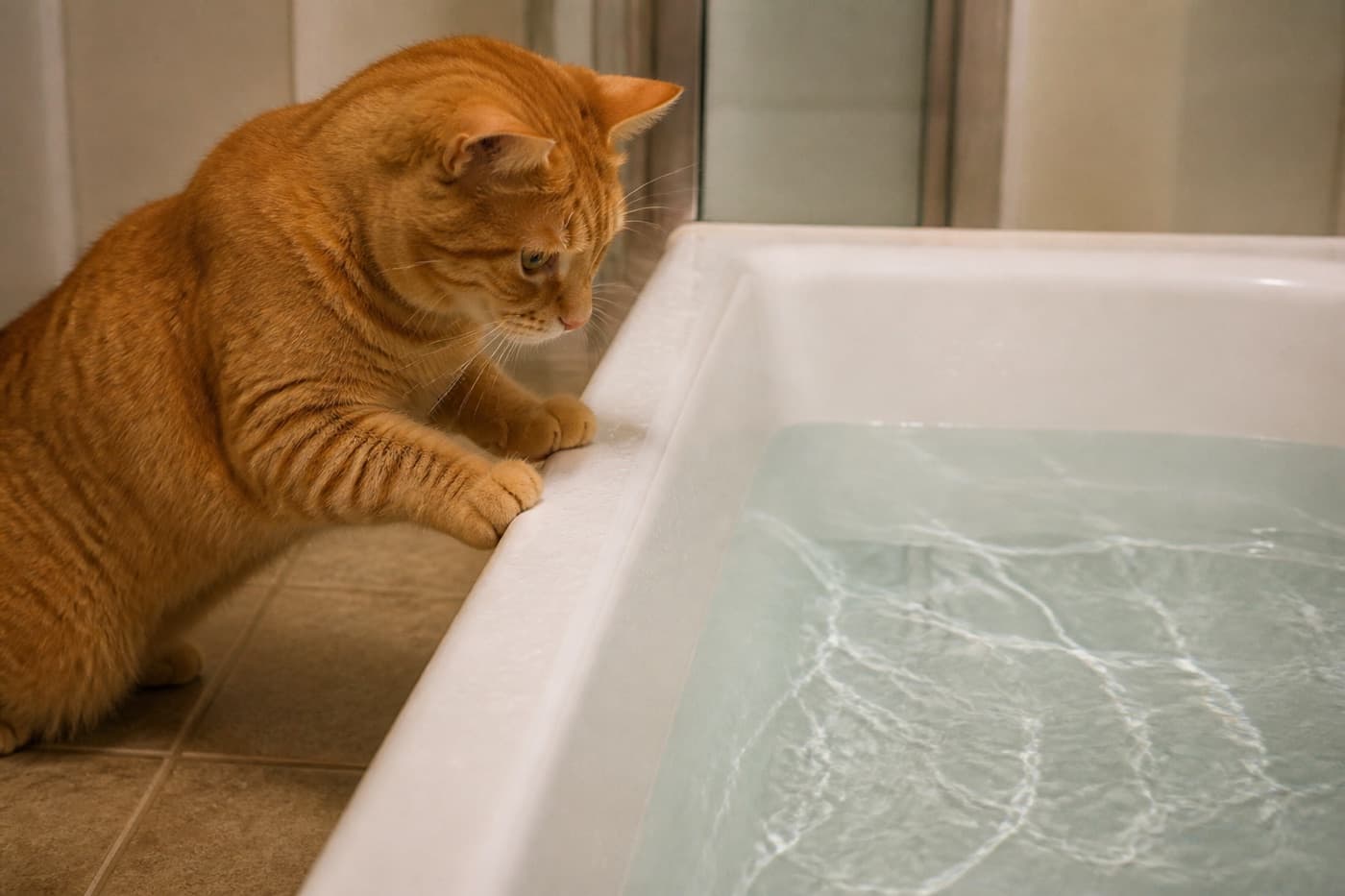
Many cats dislike getting soaked because wet fur is heavy and baths feel like a loss of control. PetMD treats that as comfort and learning, not a character flaw.
Some breeds splash or swim. Individual cats still get a vote. Forcing a dunk teaches fear faster than it teaches “fun.”
PetMD’s hate-water page starts with experience. A slip in a tub, a forced dunk, or a loud spray nozzle can stick. Veterinarians quoted there note that cats without control over the soak get stressed. Cortisol rises. The next sound of running water becomes a warning.
Coat physics matters too. Cat fur holds water. Heavy, cold fur slows a predator that wants to stay nimble. Scents from soaps and the noise of a filling tub add sensory overload. None of that is the cat being “dramatic.” It is a mammal protecting mobility and predictability.
Ancestry notes (less water in the life of desert-leaning wildcats) show up in popular writing. Use them as background, not as a personality insult. The owner facts that help today are coat weight, past trauma, and control.
PetMD’s water-loving page says liking water is uncommon but real. Turkish Vans and Turkish Angoras often get credit for more water-resistant coats. Bengals, some Savannahs, and Maine Coons appear on “may splash” lists. VCA’s Turkish Van breed page says the breed loves water and may join a shower. Ocicats get a similar note.
Breed tendency is not a guarantee. A Van can still hate your shampoo. A domestic shorthair can still chase a faucet drip. Let the cat choose the drip. Do not shove a “swimming breed” into a pool to prove a nickname.
Ask whether a full bath is required. Many cats stay clean with brushing. Medical skin cases belong to the veterinarian, who may prescribe a product and a method. PetMD is clear: never force a cat into water to “get over it.” That compounds fear.
If a bath must happen, keep sessions short, keep footing secure, and avoid turning the spray into a hunt. A faucet the cat chooses is enrichment. A tub the cat cannot leave is the opposite. This page is editorial. The about page is the author URL.
PetMD treats water aversion as discomfort and learning more than a personality insult. Wet fur gets heavy. Past forced baths or slips raise fear. Loss of control in a tub is stressful. Many cats still play at a faucet while refusing a dunk.
No. PetMD and VCA breed notes name exceptions such as Turkish Vans (and sometimes Bengals, Maine Coons, or Ocicats) that splash or swim. Individual cats vary inside a breed. Never force a swim to “train” liking.
Ancestry and coat stories show up in popular explainers. PetMD’s water pages lean harder on coat weight, scent, sound, and past experience. Use those owner facts. Do not turn ancestry into a slur about the cat’s character.
PetMD notes cats generally know how to swim. Knowing how is not the same as enjoying a bath. Forced immersion makes fear worse.
Ask your veterinarian whether a bath is even needed. Many cats are better served by brushing and spot cleaning. If a bath is required, go slow, keep control gentle, and stop escalating with a spray nozzle fight. We will not invent a restraint chart.
Control. A drip they choose is play. A full-body soak they cannot leave is a different file. That split is common on PetMD’s water pages.
If the cat suddenly refuses drinking water, or if bathing is required for a medical skin problem, call the clinic. Fear of baths alone is usually behavior and coat comfort, not a toxin page.
Reader notes are not veterinary advice. If an animal is unwell, call the veterinarian who sees them.
Be the first to leave a note on this guide.