Knocking objects is usually hunting practice and attention, not revenge. Enrichment and safer shelves beat punishment.
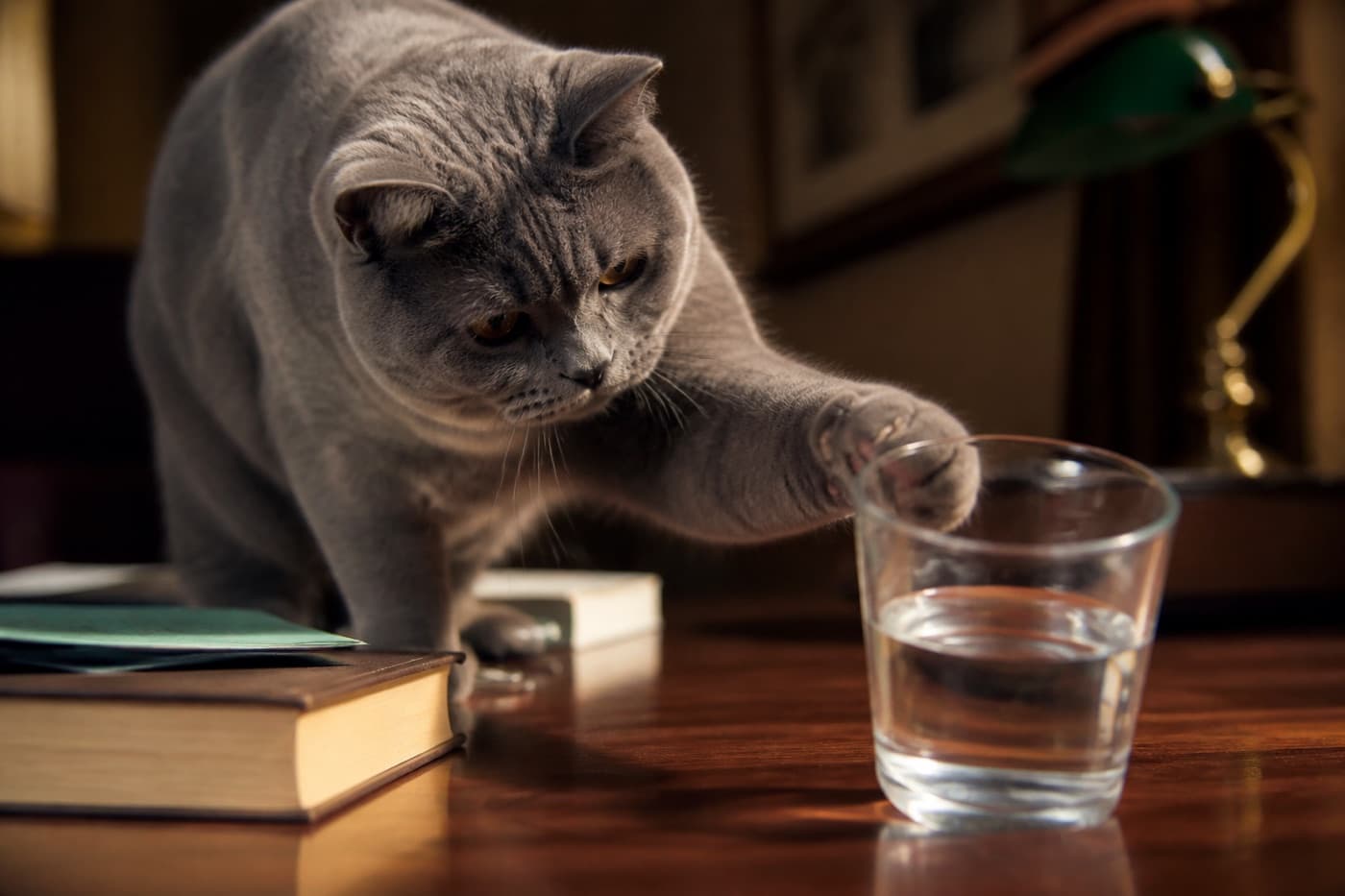
Cats knock things over for hunting, play, boredom, or attention. PetMD’s behavior page treats the bat-and-watch fall as instinct and learning, not spite.
Your gasp still counts as a response. Clear the edge, give the paws a better job, and call the veterinarian if an older cat suddenly becomes a midnight demolition crew with other signs.
PetMD starts with predators: cats are wired for things that dart. Pushing a pen or a glass off a desk creates motion. The fall is the “flee.” That is the same circuit that loves a wand toy or a bug on the wall. It is play and investigation, not a moral judgment about your favorite mug.
Attention is the other common file. If you talk, pick the cat up, or rush over every time something tips, the cat learns that the edge of the table is a button. Even a scold is still a social event. Boredom fills the gap when the house is quiet for hours and the only interactive object left is your remote.
None of that is spite. Cats do not sit through a revenge seminar. They sit through a reinforcement loop. Soft social habits like kneading or licking are a different channel. If those are the question, see why cats knead and why cats lick you.
PetMD’s fix is enrichment and response management. Put breakables away. Offer daily interactive play that ends with a catch and a small meal. Rotate toys so novelty returns. Redirect before the paw reaches the glass, not after the shatter. Ignore the performance when you can do it safely.
Vertical space, window seats, and puzzle feeders give the hunting brain a legal job. Water bottles and yelling often become part of the game. If the chaos clusters at dawn, stack play into the evening. House cats are crepuscular. Read are cats nocturnal for the clock, not a different species.
Lifelong kitten batting of pens is one story. A senior who suddenly races, knocks, yowls, drinks more, loses weight, or seems confused is another. Hyperthyroidism and cognitive dysfunction show up in older cats as restless, high-drive nights. Pain can scramble sleep and play too. See the veterinarian. Do not label it spite.
This page is editorial. It does not replace the veterinarian who sees that cat. The about page is the author URL.
PetMD treats knocking as hunting instinct, play, boredom, or learned attention-seeking. Fast-moving or teetering objects invite a bat. It is not spite. Your reaction can train the next glass.
No. Veterinary behavior writing does not frame shelf-clearing as revenge. Predatory play, curiosity, and attention are the usual files. Punishment often makes the game more interesting.
Clear breakables, offer wand-toy play that ends in a “catch,” rotate toys, and do not rush over with drama when something falls. Redirect before the paw reaches the edge. Enrichment beats a spray bottle.
Crepuscular peaks (dawn and dusk) plus leftover energy after a quiet day make evening and early-morning batting common. Fix the play schedule. Read are cats nocturnal if the whole night is loud.
A sudden new pattern in an older cat, especially with restlessness, weight loss, extra drinking, litter changes, or confusion, needs a veterinarian. Hyperthyroidism and cognitive change can look like “random chaos.” Pain can too.
Sometimes the fall is the toy. Sometimes your gasp is the treat. Either way, repeating the rescue on cue pays for the next shove. Offer a legal batting toy instead.
Not reliably. Another cat is a social decision, not a shelf-protection plan. Play and a cleared desk come first. Loneliness has its own guide if that is the real question.
Reader notes are not veterinary advice. If an animal is unwell, call the veterinarian who sees them.
Be the first to leave a note on this guide.