Kneading is leftover kitten nursing. Why cats push with their paws on laps and blankets, and when one swollen paw is a call.
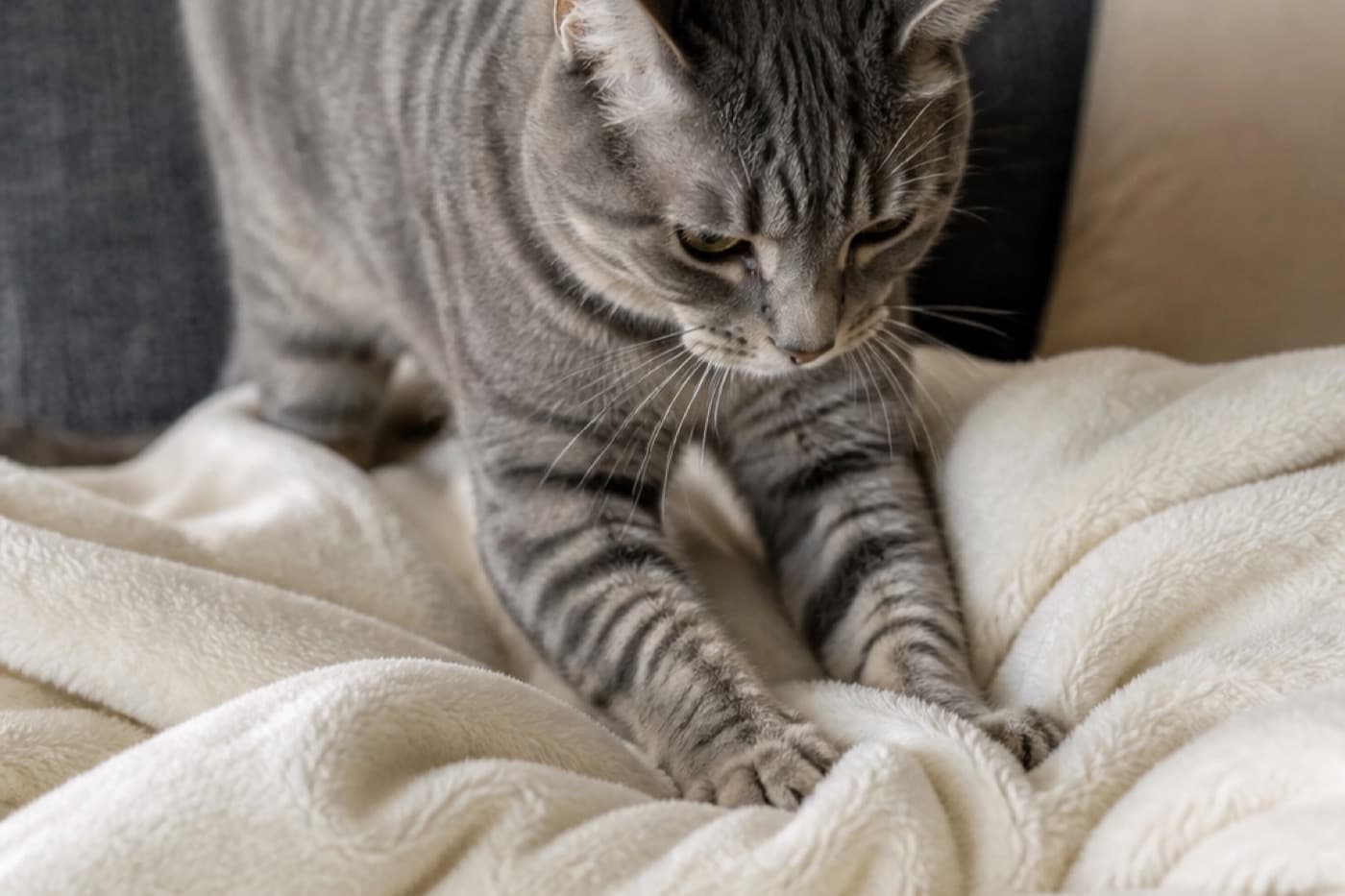
Cats knead because the motion starts as nursing. Veterinary behavior pages treat those rhythmic pushes as a leftover kitten pattern that later marks comfort, territory, and a soft place to sleep.
Your sweater is not a diagnosis. Watch the rest of the body. Loose eyes and a purr is one story. A tense cat that suddenly kneads one swollen paw is another.
Kittens push the queen’s belly to keep milk moving. Adult cats keep the motor pattern on laps and blankets. Your lap stands in for that soft, warm surface. Soft throws get the same treatment. The motion is usually comfort, not a plot against your legs.
Early-weaned cats sometimes knead more. That is a tendency, not a life sentence. The motion can show up in cats raised on a bottle and in cats raised on a queen. Do not use it as a weaning timeline. Many cats purr while they knead. Kneading plus a loose body and half-closed eyes is the comfortable picture.
Some cats slip back into a nursing pattern and drool. It looks messy. It is usually not illness if the cat is otherwise well. Sudden drooling with pawing at the mouth is a dental or nausea call instead. Intact females can be extra restless when in heat, but kneading alone does not diagnose that. Calling, rolling, and a new clingy pattern together are more useful. Ask the veterinarian about spay timing. This page will not set it.
Paw pads carry scent glands. Kneading a sofa is also a quiet “mine” mark, the same family of signal as rubbing a cheek on a doorframe. A cat that kneads, then curls up, just claimed a nap site. That is ordinary house-cat work.
If you want the night-clock version of cat behavior, read whether cats are nocturnal. Dawn and dusk peaks explain a lot of evening biscuit-making that owners read as a night-shift personality. The motion itself is still the nursing leftover, not proof the cat wants kittens.
The intent is usually comfort. The claws are still sharp. Offer a thick blanket, keep nails trimmed the way your veterinarian showed you, and move the cat before the claws land. We will not write a declaw how-to. Declawing is a surgical decision you make with a veterinarian, not a default for sofa damage. Nail trims, a thick throw, and standing up before the claws land are the owner tools.
Everyday biscuit-making on a blanket is not an emergency. Call if the cat suddenly kneads one painful limb, if there is swelling, or if the motion is frantic and new in a senior. One swollen paw is not “cute.” That is a veterinary visit. New, frantic kneading plus drooling and mouth-pawing belongs in the same exam file.
Read how we handle behavior claims on the about page.
VCA and other veterinary behavior pages treat kneading (pushing the paws in and out, “making biscuits”) as leftover kitten nursing behavior. It also shows up when a cat is settling, marking with scent glands in the paws, or stretching. It is usually comfort, not a plot.
The same motion. Your lap stands in for the queen’s belly. Soft blankets get the same treatment. Claws out on skin is a trimming and placement problem, not proof the cat is angry.
Often, yes. Many cats purr while they knead. Purring is not only happiness. If you need that distinction, read why cats purr. Kneading plus a loose body and half-closed eyes is the comfortable picture.
Some cats slip back into a nursing pattern and drool. It looks messy. It is usually not illness if the cat is otherwise well. Sudden drooling with pawing at the mouth is a dental or nausea call instead.
Intact females can be extra restless when in heat. Kneading alone does not diagnose that. Calling, rolling, and a new clingy pattern together are more useful. Ask the veterinarian about spay timing. This page will not set it.
Offer a thick blanket, keep nails trimmed the way your veterinarian showed you, and move the cat before the claws land. We will not invent a declaw argument. Declawing is a surgical decision you make with a veterinarian, not a default for sofa damage.
Call if the cat suddenly kneads one painful limb, if there is swelling, or if the motion is frantic and new in a senior. Everyday biscuit-making on a blanket is not an emergency.
Reader notes are not veterinary advice. If an animal is unwell, call the veterinarian who sees them.
Be the first to leave a note on this guide.