Cats lick people as social grooming. Why the lick-then-bite happens, and when bald patches or raw skin need a veterinarian.
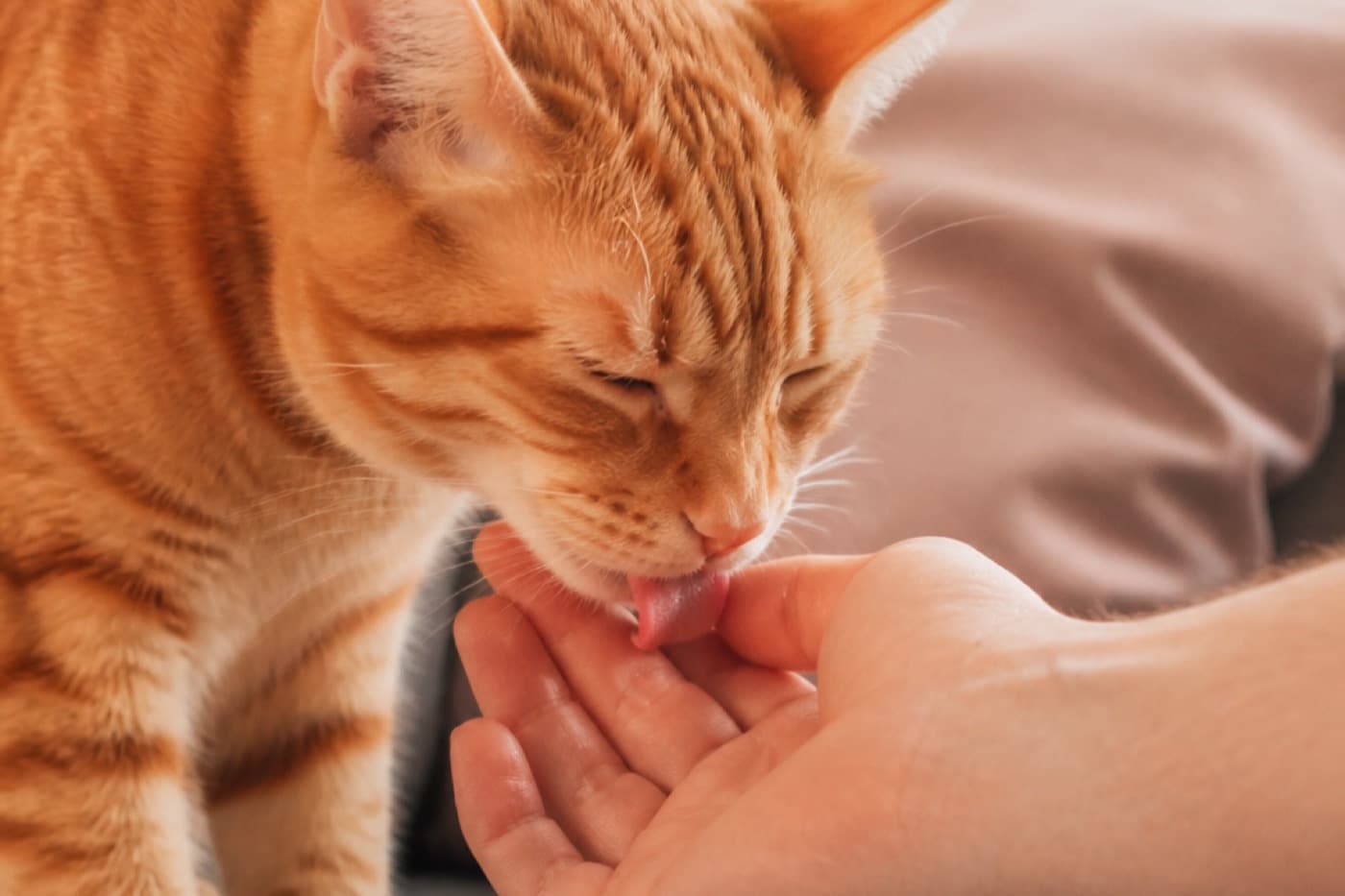
Cats lick people as social grooming. The same tongue that cleans a shoulder blade will clean your wrist. Veterinary behavior writing treats that as bonding, a kitten leftover, and sometimes a salt-or-lotion taste. It is usually not a lab test.
Watch for the switch. A few rasps, then a nap, is ordinary. Bald patches, raw skin, or a bite after every lick needs a different plan.
Allogrooming (licking another cat) is normal colony behavior. Licking you is the same file, with worse hygiene reviews. Kittens are licked by the queen. Adults keep the habit on people they live with. A slow blink plus a lick is the comfortable picture.
Sometimes the lick is a bid for attention, or a prelude to asking for food. If licking only happens at mealtime, look at the clock, not the soul. If the cat licks you and then vomits yellow or stops eating, that is a medical page, not a snack request. Pica and fabric sucking are a different list from licking your arm. If the cat eats string or wool, that is a foreign-body risk. Call the veterinarian. Do not wait for “one more sock.”
If you want the night-vision version of “why is the cat staring,” start with whether cats see in the dark.
A common pattern: lick, then a small bite, then a hop away. Overstimulation on the lap looks like that. Many cats have a short petting budget. The lick is the start. The bite is the stop button. It is not “love then hate.” It is a cat that ran out of room for more hands.
Tail lashing, skin twitching, and ears going sideways are the warning lights. Stand up before the teeth. We will not write a “hold the cat down” drill. Stop before the bite if the tail starts to lash, and give the cat space to leave the lap on its own terms.
Skin tastes like salt and whatever you put on it. Food smells on fingers explain a lot of “random” licking. Wash lotion off if the licking is new and frantic. Some products are not for cats. If the cat then drools or wobblies, that is a poison call, not a bonding moment. ASPCA Animal Poison Control is 888-426-4435. Fees may apply.
A lick on intact skin is ordinary household contact. Broken skin, a puncture, or a lick into a wound is a human-medical question. Cat bites can infect people. This page will not treat your hand. See a physician for bites. Face licking is a hygiene choice, not a veterinary requirement. The mouth that just cleaned a litter tray is the same mouth. Skip it if anyone in the house is immunocompromised, and ask your physician if you are unsure.
Bald bellies, raw wrists, or licking plus hiding and not eating belong to the veterinarian, not a “more affection” theory. Call if licking is new, frantic, or focused on one spot of your skin until it is raw, or if the cat licks itself bald. Those patterns sit with pain, itch, or compulsive behavior. The veterinarian who sees that cat sorts them. Read how we handle behavior claims on the about page.
Veterinary behavior pages treat licking people as social grooming, a leftover of kitten care, and sometimes a bid for attention or a taste of salt on skin. It is usually bonding, not a secret medical test. Compulsive licking that wears hair off, or licking plus drooling and hiding, is the version that needs a veterinarian.
A common pattern: lick, then a small bite, then a hop away. Overstimulation on the lap looks like that. Stop before the bite if the tail starts to lash. It is not “love then hate.” It is a cat that ran out of petting budget.
A lick on intact skin is ordinary household contact. Broken skin, a puncture, or a lick into a wound is a human-medical question. Cat bites can infect people. This page will not treat your hand. See a physician for bites.
Pica and fabric sucking are a different list from licking your arm. If the cat eats string or wool, that is a foreign-body risk. Call the veterinarian. Do not wait for “one more sock.”
Sometimes it is a prelude to asking for food. If licking only happens at mealtime, look at the clock, not the soul. If the cat licks you and then vomits yellow or stops eating, that is a medical page, not a snack request.
You decide. The mouth that just cleaned a litter tray is the same mouth. Face licking is a hygiene choice, not a veterinary requirement. Skip it if anyone in the house is immunocompromised, and ask your physician if you are unsure.
Call if licking is new, frantic, or focused on one spot of your skin until it is raw, or if the cat licks itself bald. Those patterns sit with pain, itch, or compulsive behavior. The veterinarian who sees that cat sorts them.
Reader notes are not veterinary advice. If an animal is unwell, call the veterinarian who sees them.
Be the first to leave a note on this guide.