Zoomies are common bursts of play energy, often at dusk. Short play sessions help. Pain or panic looks different.
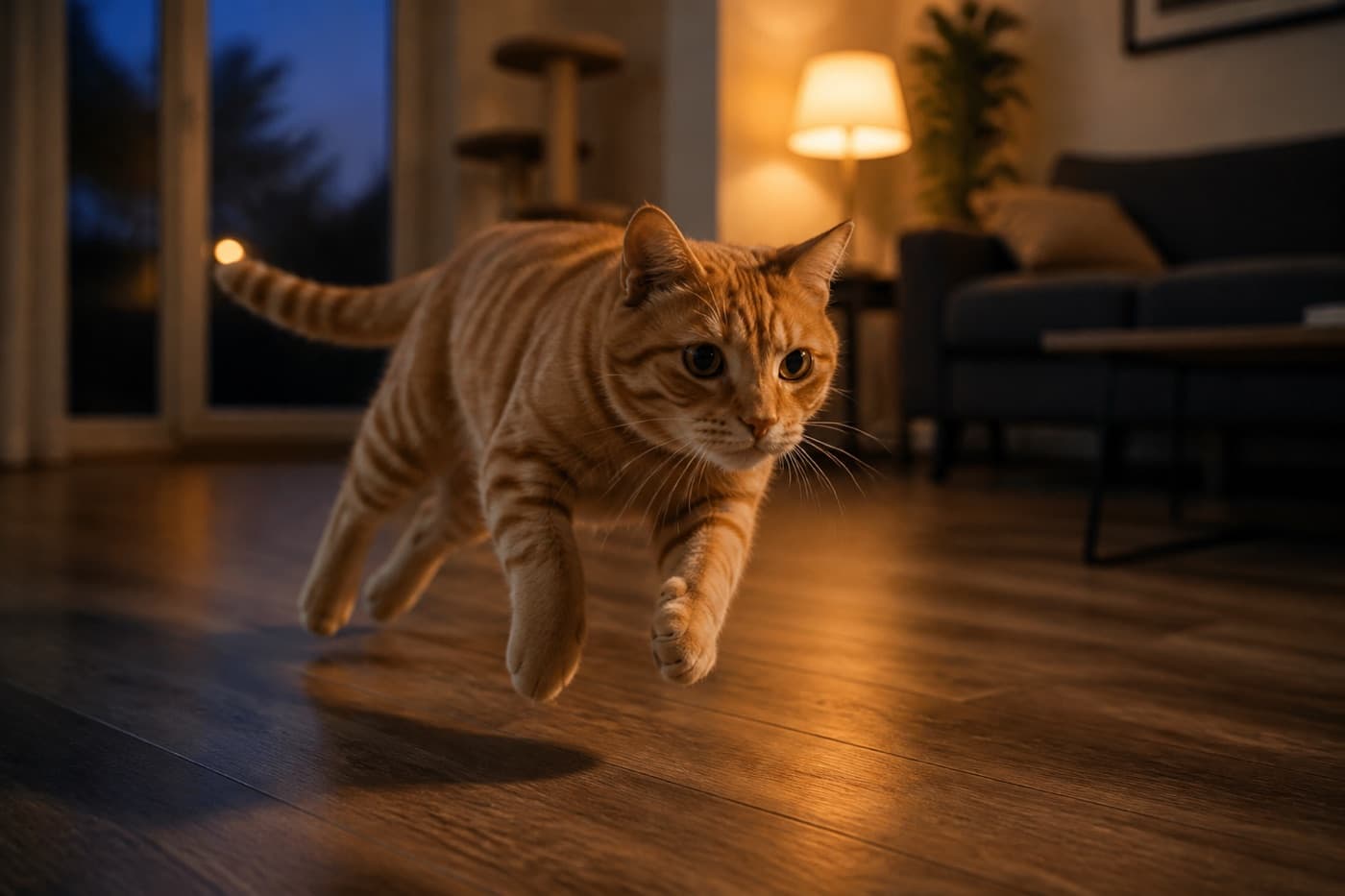
Cat zoomies are Frenetic Random Activity Periods (FRAPs). PetMD treats most bursts as a normal energy and hunting dump, not a personality disorder.
Brief and playful is common. New racing plus pain, litter trouble, or a frantic senior pattern is a veterinarian visit.
PetMD’s zoomies page names the behavior Frenetic Random Activity Periods. The sprint, the sharp turn, the skid into the hallway: that is pent-up energy and predatory motor patterns firing without a mouse. Indoor cats get fewer outdoor miles, so the living room becomes the track.
A few minutes of coordinated play-running is not something to punish. Veterinarians quoted on PetMD compare stopping ordinary zoomies to stopping children from playing. Clear the obstacle course. Offer a wand toy so the hunt has an ending. After the catch, many cats groom and nap. That loop is success.
Cats are crepuscular. PetMD notes many zoomies land at dawn or dusk. If you sleep through the cat’s peak, you meet the leftover sprint at 5 a.m. Move play and a meal into the evening. For the species clock, read are cats nocturnal. Dim-light skill is a separate guide: can cats see in the dark.
Post-litter zoomies show up on the same PetMD page. Defecation can stimulate the vagus nerve and produce a relief-excitement sprint. Environmental triggers (delivery noise, a new person, a slammed door) can too. Shelf clearing in the same window is often the same leftover energy. See why cats knock things over.
PetMD separates playful FRAPs from anxiety or medical restlessness. Fear-driven racing can look uncoordinated or frantic. Pain vocalizing, litter straining, hiding, weight loss, or a senior who suddenly never settles needs an exam. Hyperthyroidism in older cats is a classic “high drive” medical file.
New plus other signs beats “breed energy” as an explanation. This page is editorial. The about page is the author URL.
PetMD calls them Frenetic Random Activity Periods (FRAPs): short bursts that dump pent-up energy and hunting drive. They are usually normal play, especially at dawn and dusk.
Brief, coordinated sprints with a soft landing into grooming or a nap are ordinary. Clear breakables and cords. Frantic, painful, or fear-driven racing is a different file.
PetMD cites veterinarians who link some post-litter zoomies to vagus-nerve stimulation and a feeling of relief. It shows up in dogs too. It is usually not a litter-box emergency by itself.
Cats are crepuscular. Zoomies often land at dawn and dusk. Move play and a meal into the evening. Read are cats nocturnal for the clock.
Call if zoomies are new and paired with pain signs, loud distress, litter straining, hiding, weight loss, or a senior who suddenly cannot settle. Hyperthyroidism and anxiety can look like “more zoomies.”
PetMD’s practical line: a few minutes of running and jumping is play. Do not punish it. Offer legal chase toys so the dump happens away from the stairs edge.
Indoor cats have fewer outdoor miles. FRAPs become the outlet. Daily wand play that ends in a catch reduces the midnight version for many households.
Reader notes are not veterinary advice. If an animal is unwell, call the veterinarian who sees them.
Be the first to leave a note on this guide.