A soft stare and slow blink can be social. A hard stare may signal tension. Context and body language matter more than myth.
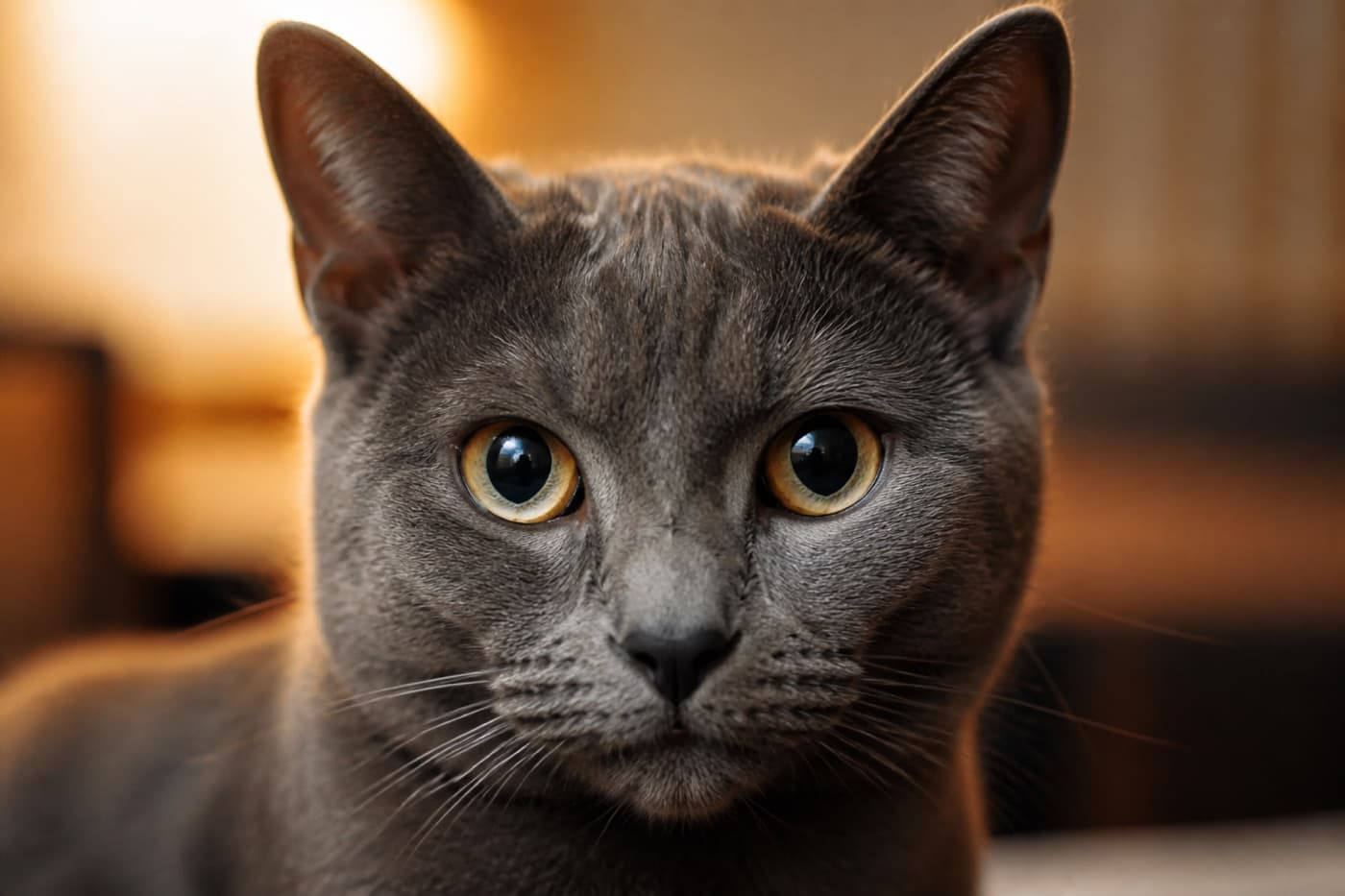
Cats stare to communicate, not to hex you. PetMD separates a soft gaze and slow blink from a hard, unblinking warning. The rest of the body decides which file you are in.
Food, play, affection, fear, and aggression can all ride on eye contact. A vacant stare plus other illness signs is a veterinary call. We will not invent a mystical chart.
PetMD says cats can show affection with eye contact and soft blinks. Closing the eyes for a beat is a safety signal: the cat trusts the moment enough to drop the guard. You can slow-blink back. That is the friendly reply.
A hard, unblinking stare with stiff posture and raised fur along the back and tail is the opposite file. PetMD reads that as a warning that confrontation can follow. Give space. Do not answer with your own locked gaze. Between cats, a long hard stare is a challenge, not a compliment.
Dilated pupils, ear position, and tail motion help you sort fear from play. Fear often pairs with a tense body and an escape plan. Play often crouches, then sprints. Read the whole cat, not one eye photo.
Some stares are requests. PetMD lists attention-seeking, hunger, and play solicitation. A meow, a rub, or a roll after the stare makes the ask clearer. Check the bowl and the litter before you invent a personality theory.
The foot-pounce version is still play: crouched stare, dilated pupils, swishing tail, then a sprint. Redirect to a wand toy. If you want the night-clock context for evening stalking, see whether cats are nocturnal. Dawn and dusk peaks explain a lot of hallway ambushes.
PetMD says to contact your veterinarian if staring pairs with behavior changes or signs of illness. A vacant, odd stare plus disorientation, circling, bumping into furniture, seizures, or a sudden drop in appetite is not “just quirky.” That is an exam.
One eye that will not open, squinting, discharge, or a new cloud over the eye is an eye problem, not a slow blink. Pain can also change how a cat holds a gaze. Do not wait for the stare to look friendlier. Call the veterinarian who sees that cat.
PetMD says cats stare to communicate: attention, food, play, affection, fear, or a hard warning. Read the rest of the body. Eyes alone are not the whole sentence.
PetMD treats soft eye contact plus a slow blink as affection and safety. The cat is comfortable enough to close the eyes for a moment. You can slow-blink back. Do not answer with a hard stare.
A hard, unblinking stare with a stiff body, raised fur, and a tense tail is a warning on PetMD’s list. Back off and give space. Do not stare back as a challenge.
Cats notice insects, dust, and sounds you miss. Occasional wall-watching can still be ordinary hunting focus. A vacant stare plus other illness signs is a veterinary call.
Skip the long unblinking contest. PetMD’s friendly reply is soft eye contact and a slow blink. A hard stare can read as a challenge between cats.
Call if the stare looks vacant and the cat also seems disoriented, bumping into things, circling, seizing, or suddenly changing appetite or litter habits. Behavior pages do not clear a neurological exam.
That is play solicitation on PetMD’s list: crouched body, dilated pupils, swishing tail, then a sprint. Redirect to a toy. Feet are not enrichment.
Reader notes are not veterinary advice. If an animal is unwell, call the veterinarian who sees them.
Be the first to leave a note on this guide.