Boxes offer cover, warmth, and a sense of safety. Cardboard enrichment is cheap and useful. Skip scented packing materials.
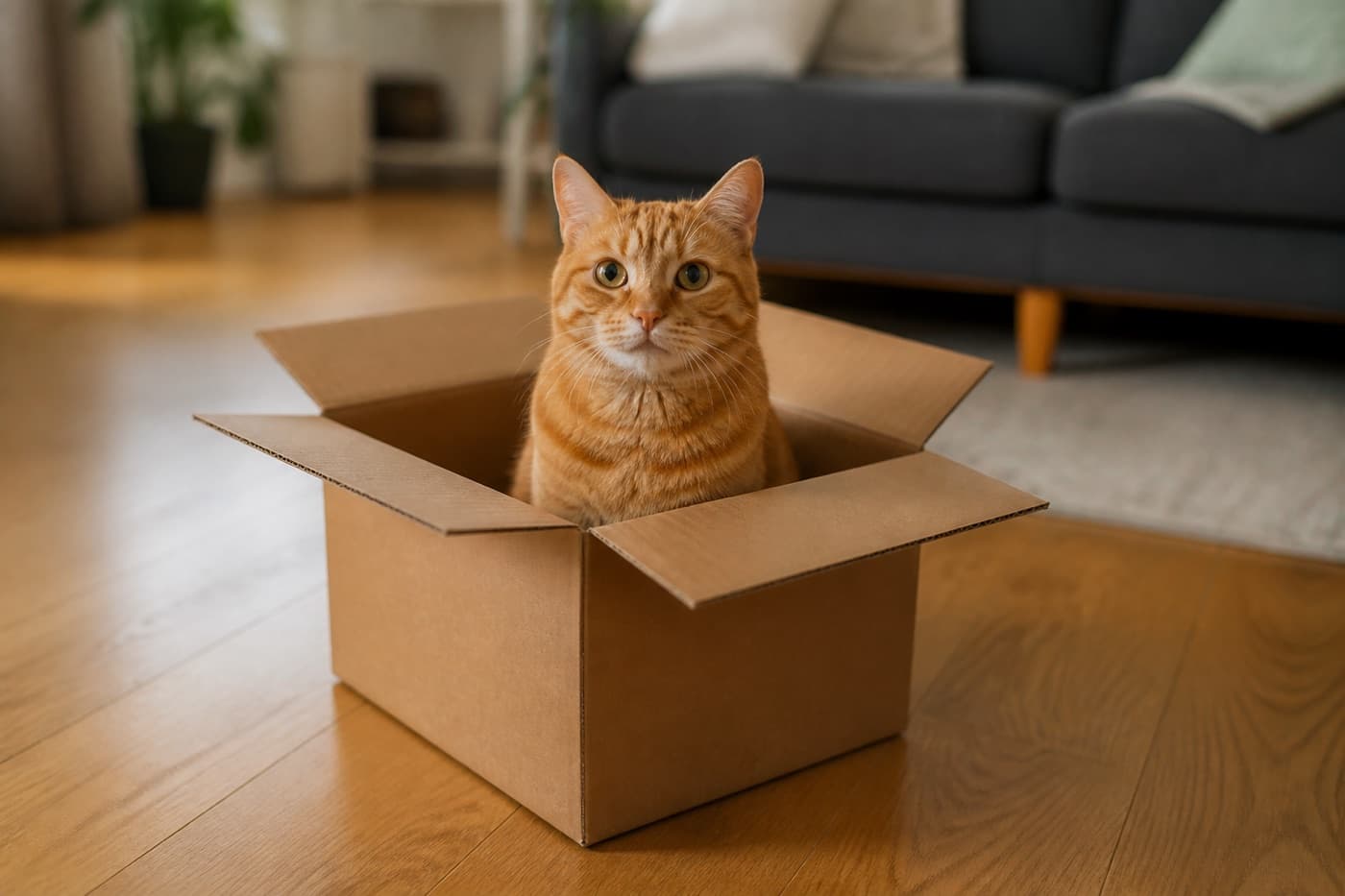
Cats sit in boxes because enclosed spaces feel safe, warm, and useful for ambush play. PetMD treats the habit as common and normal. ASPCA enrichment pages treat cardboard boxes as ordinary feline enrichment, not a quirk to “fix.”
Your shipping carton is not a diagnosis. A cat that naps in a box and then eats, uses the litter, and greets you is doing cat work. A cat that never leaves the box and stops eating is a clinic day.
PetMD’s box page leads with safety. Small, hidden spaces protect cats from predators in the wild. A cardboard box is a den stand-in: the cat can watch while feeling enclosed. Cats sleep a large part of the day. A secure nap site matters.
Ambush is still in the motor pattern. Cats hide, wait, then pounce. A box with open sides is a pretend bush. Feet, toys, and housemates become practice prey. That is play leftover, not proof the cat is plotting.
Warmth is the quieter reason. Cardboard holds body heat. Curling in a tight space helps a cat stay cozy. PetMD also notes stress reduction: when the house feels loud, a box is a break. That is ordinary coping, not proof you failed as a host.
ASPCA’s feline DIY enrichment page treats cardboard houses and tunnels as real enrichment projects. Boxes of different sizes, non-toxic glue, and supervised play are the toolkit. Some cats shred corners. That sensory work is part of the appeal.
Leave the tape, staples, and plastic packing out of reach. Supervise if the cat chews cardboard into swallowable bits. A paper shopping bag with handles removed is a common add-on. Plastic bags and dangling handles are not the same gift.
If you want more on how cats use the night clock, see whether cats are nocturnal. Dawn and dusk energy often lands in a box fort before a pounce. The box itself is still the den and ambush tool PetMD describes.
Everyday box sitting is common and normal. Call if the cat suddenly lives only in the box, stops eating, skips the litter, or shows new aggression when you approach. Pain and illness make cats hide. Do not wait for a “cuter” explanation.
Do not drag the cat out for photos. Forcing a hideaway open teaches that the den is not safe. Offer a second quiet room, keep litter and food nearby, and let the cat choose. New, absolute hiding belongs on the phone with the veterinarian who already knows that animal.
PetMD lists security, ambush hunting leftover, warmth, and stress reduction. A cardboard box is a hideaway, not a personality flaw. ASPCA enrichment pages treat boxes as ordinary feline enrichment.
Yes for short rests and play. Constant hiding with no appetite, no litter use, or new aggression is a different file. That is a veterinary call, not proof the box is “too good.”
PetMD says boxes offer comfort and security when cats feel stressed. Shelter research often cited in behavior writing shows hideaways help newly housed cats settle. A box is enrichment, not therapy for every medical problem.
Enclosed walls feel safer than an open cushion. Cardboard also holds body heat. Many cats ignore the expensive bed and claim the shipping carton. That is common, not a failure of the bed.
Paper bags with handles cut off are a common enrichment tip. Plastic bags and handles that can catch a neck are not. Supervise, and remove anything the cat tries to swallow.
No. Dragging a cat out of a hideaway teaches the opposite of safety. Offer the box, leave a quiet exit, and let the cat choose. If hiding is new and absolute, call the veterinarian who sees that cat.
No. PetMD’s reasons are den safety, warmth, ambush play, and stress relief. Do not invent a pack-rank story for a cardboard fort.
Reader notes are not veterinary advice. If an animal is unwell, call the veterinarian who sees them.
Be the first to leave a note on this guide.