ASPCA lists avocado as toxic and names persin. The pit is a blockage risk. Why this page has no leftover-flesh chart.
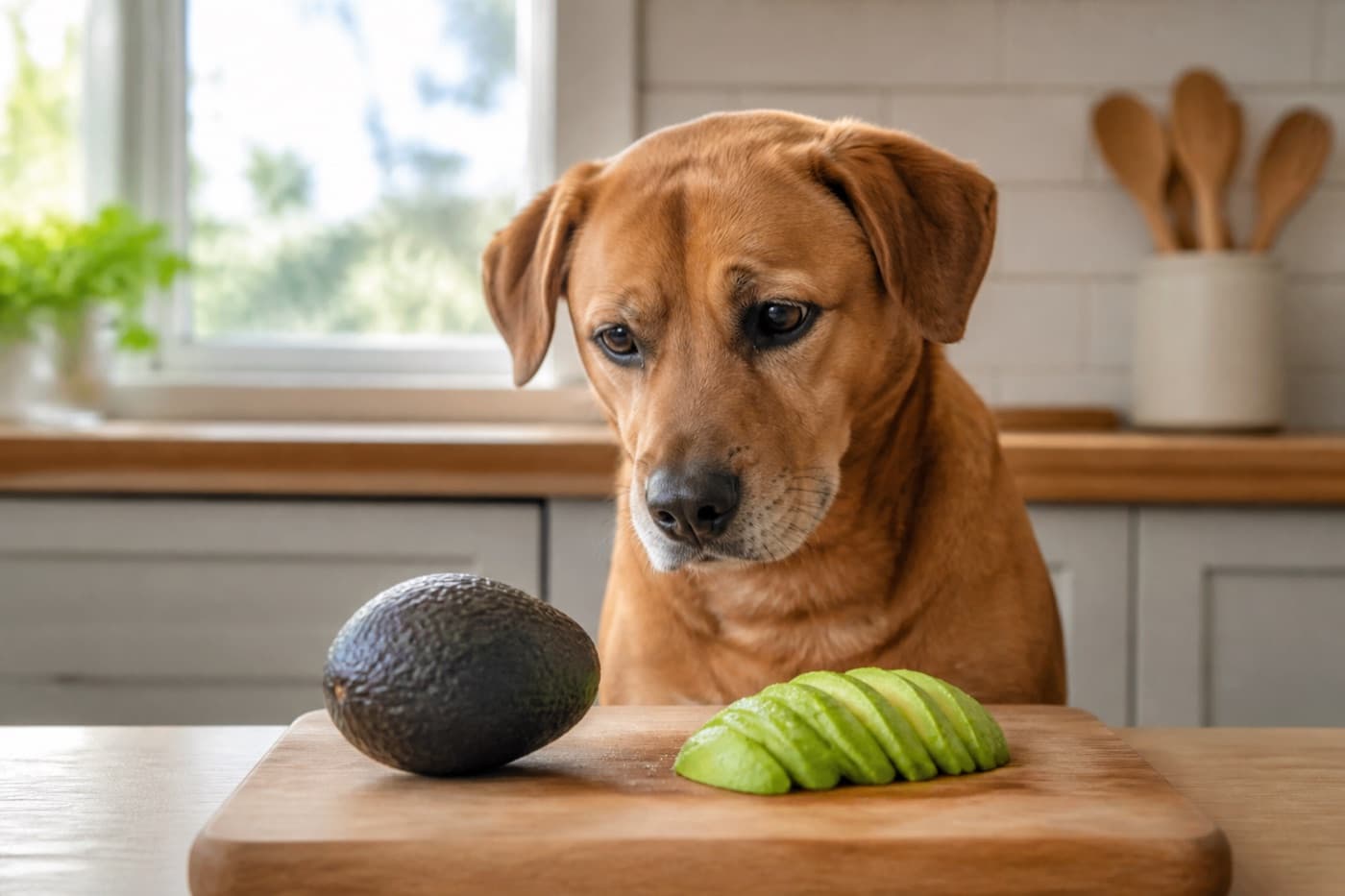
Do not feed avocado as a treat. ASPCA lists avocado as toxic, names persin, and flags leaves, plant parts, and serious signs in other species. The pit is a choking and blockage risk in dogs. We will not publish a leftover-flesh allowance.
Write down what was eaten (flesh, skin, pit, guacamole mix), an amount estimate, the time, and the dog’s weight, then call.
ASPCA lists avocado (Persea americana) as toxic and names persin as the toxic principle. The plant card highlights horses, with respiratory distress, heart failure, and edema on that same card. Sensitivity varies by species. That is why this page will not invent a dog “safe amount.”
Leaves, bark, and skin carry more of the plant story than a marketing smoothie. Dogs may get milder gut signs from some parts, and a surgical emergency from the pit. If the dog stripped a house plant or chewed a whole fruit, say that on the call. Do not sort “only a little flesh” from a forum average.
A swallowed pit can obstruct. That is surgery talk, not a persin debate. Count the pits on the board. If one is gone and the dog starts vomiting or not eating, go in. We will not tell you to wait 48 hours from a comment thread. A hunched belly after a pit goes missing is a same-day veterinary problem.
Guacamole is not “just avocado.” Onion, garlic, salt, and spices ride along. Onion-family plants are their own toxin file. Tell the veterinarian every ingredient. Read whether dogs can eat onions if those were in the bowl. Grapes on the same snack board are their own emergency. See whether dogs can eat raisins if fruit went missing too.
This page will not bless pantry avocado oils either. Fat-heavy extras can upset the gut or contribute to pancreatitis. If a bottle was licked empty, call with the label in your hand.
Remove what is left. Note flesh versus skin versus pit versus guacamole mix, an amount estimate, the time, and the dog’s weight. Call an emergency veterinarian if the dog is already sick or a pit is missing. You can also call ASPCA Animal Poison Control at 888-426-4435 or Pet Poison Helpline at 855-764-7661 (fees may apply).
Do not invent peroxide from this page. A pit in the wrong place and a home emetic are two injuries. The veterinarian or a poison hotline decides decontamination. “A little avocado is a healthy fat” and “he’ll pass the pit” are still call-first sentences when ASPCA lists the plant as toxic and a pit is missing.
Treat avocado as a problem food, not a snack. ASPCA lists avocado (Persea americana) as toxic, with persin as the named principle, and highlights horses on that plant card. Leaves, bark, skin, and the pit are the parts veterinary pages worry about most. The pit is also a choking and blockage risk. We do not publish a leftover-flesh chart.
ASPCA names persin as the toxic principle in avocado. Sensitivity varies by species. Horses show respiratory distress, heart failure, and edema on that ASPCA card. Dogs may get milder gut signs from some parts, and a surgical emergency from the pit. Species differences are why this page refuses a homemade “safe cube” number.
Guacamole is not “just avocado.” Onion, garlic, salt, and spices ride along. Onion-family plants are their own toxin file. Tell the veterinarian every ingredient. See the onion guide if alliums were in the bowl.
The pit is a foreign-body risk even if someone on the internet calls the flesh “fine.” A swallowed pit can obstruct. Vomiting, not eating, and a hunched belly after a pit goes missing are a same-day veterinary problem.
This page will not bless pantry oils. Fat-heavy extras can upset the gut or contribute to pancreatitis. If a bottle was licked empty, call with the label in your hand.
Not from this page. A pit in the wrong place and a home emetic are two injuries. The veterinarian or a poison hotline decides.
Call an emergency veterinarian if the dog is already sick or a pit is missing. You can also call ASPCA Animal Poison Control at 888-426-4435 or Pet Poison Helpline at 855-764-7661. Fees may apply.
Reader notes are not veterinary advice. If an animal is unwell, call the veterinarian who sees them.
Be the first to leave a note on this guide.