Dogs cannot eat raisins or grapes. Cornell and poison hotlines treat any amount as a kidney emergency. What to tell a veterinarian now.
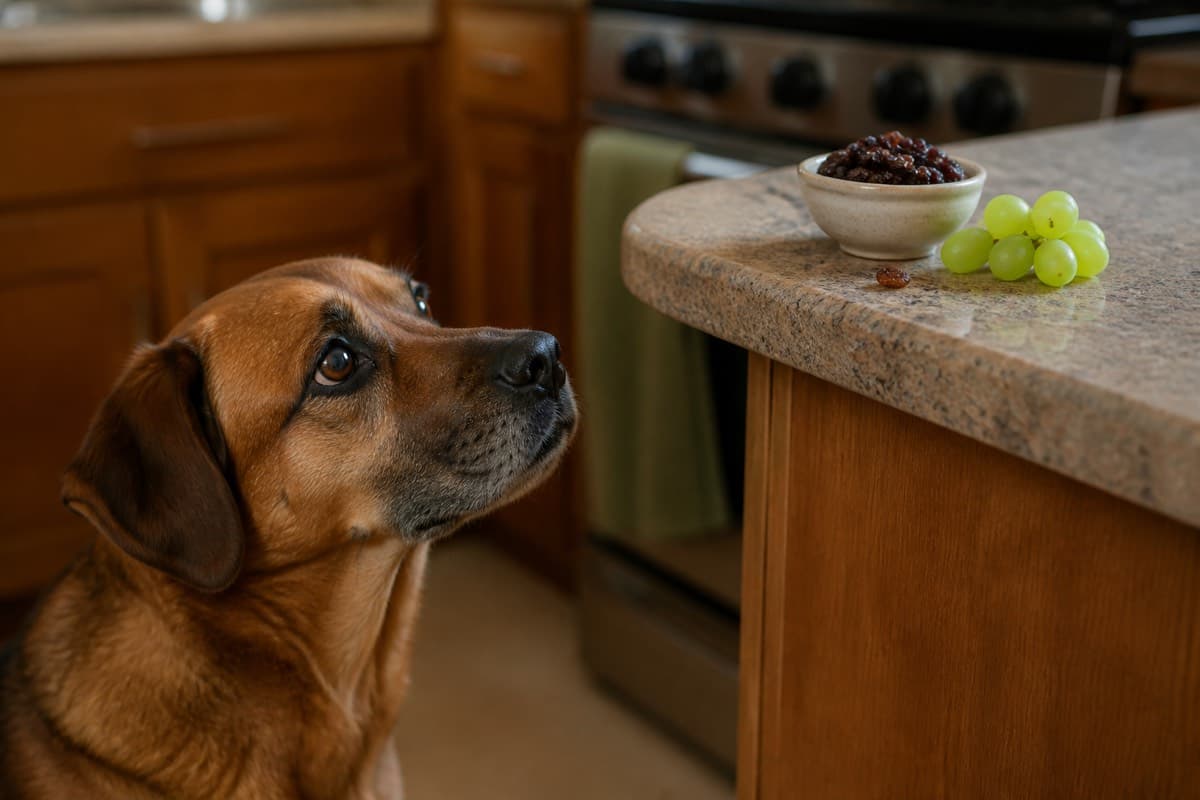
No. Dogs should not eat raisins or grapes. If you searched can dogs eat raisins, treat any ingestion as serious and call. Cornell’s Riney Canine Health Center says fruit from the Vitis genus can cause acute kidney injury.
Write the type, a count or weight of what is missing, the time, and your dog’s weight, then call a veterinarian or poison control. We do not publish a homemade safe number.
Cornell’s Riney Canine Health Center describes grape and raisin toxicosis as ingestion of fruit from the Vitis genus. Grapes, raisins, Zante currants, and sultanas can cause acute kidney injury. Some dogs get sicker than others. The exact amount is unknown, so any ingestion should be considered serious.
The likely toxin is tartaric acid and its salt, potassium bitartrate. Cornell also lists those compounds in tamarinds and cream of tartar. Pet Poison Helpline’s raisin page says gastrointestinal distress can be followed by kidney injury or failure. Tartaric acid is the suspected toxin and is not yet proven. Poisoning is reported primarily in dogs.
There is no specific antidote. Cornell says treatment is decontamination plus supportive care, chosen by a veterinarian. That list is what they may do. It is not a home kit.
Cornell’s list is grapes, raisins, Zante currants (a type of raisin), and sultanas (a type of white grape). If the dog ate trail mix, raisin bread, or a baked good with currants, write that on the call. The fruit is still the fruit. Tamarinds and cream of tartar sit in the same likely-toxin file because of tartaric acid and potassium bitartrate.
Tartaric acid varies with ripeness. Cornell says grape juice, jelly, leaves, grape seed oil, and wine have not been associated with toxicosis, likely because processing removes or reduces tartaric acid. Still do not treat leftover wine as a treat experiment. Whole fruit and baked goods with the fruit are the call-first cases.
Remove what is left. Do not chase the dog around the house for the last raisin. Write the type (grape versus raisin versus currant versus trail mix or raisin bread), a count or weight of what is missing, the time, and your dog’s weight. Then call an emergency veterinarian. You can also call ASPCA Animal Poison Control at 888-426-4435 or Pet Poison Helpline at 855-764-7661 (fees may apply).
Say if chocolate, onions, or another toxin was in the same bowl. One call should cover the whole list. Do not invent hydrogen peroxide, salt, or syrup of ipecac from a comment thread. Cornell treats decontamination as clinic care. Fruit can linger in the stomach, so a veterinarian may still induce vomiting hours later. That is their decision.
“It was only a few raisins” and “I’ll wait and see if he vomits” are still call-first sentences. Cornell says any ingestion should be considered serious. A press anecdote about one dog is not a dose you wait on.
Pet Poison Helpline’s grape page lists possible signs in a 6-12 hour window: vomiting, diarrhea, abdominal pain, grapes in vomit or stool, thirst, and too much or too little urine. There is no established toxic dose. Even a few grapes can matter, depending on the dog’s size. Merck lists vomiting or diarrhea within 6-12 hours. Oliguric or anuric renal failure may occur within 24-48 hours.
Cornell does not give you a leftover count. It says any ingestion of grapes or related fruits should be considered serious, and that early action can improve the chance of preventing or minimizing kidney damage. Absence of signs is not clearance. Call with the type, amount, time, and your dog’s weight even if the dog still looks fine.
Cornell says tartaric acid concentration varies with ripeness, and it is impossible to predict which dog will be affected or how much fruit will cause illness. ASPCA notes that tartaric acid was identified in a 2022 Journal of Veterinary Emergency and Critical Care study, with grape concentrations from 0.35% to 2%, which makes predicting toxicity difficult. Merck publishes a proposed risk line: more than one grape or raisin per 4.5 kg (10 pounds) of body weight may pose renal risk. That is Merck’s published line, not a homemade safe snack. Still treat any ingestion as a call.
Keep grapes and raisins out of reach, including trail mix and holiday baking. If you want another food-safety guide after the clinic has the case, start at the Animals Details blog. This page is editorial. It is not a diagnosis.
Cornell’s Riney Canine Health Center says grape juice, jelly, leaves, grape seed oil, and wine have not been associated with toxicosis, likely because processing removes or reduces tartaric acid. That is not a leftover-wine experiment. Whole grapes, raisins, Zante currants, and sultanas still count. Call if the dog ate fruit, trail mix, or raisin bread.
Yes. Cornell says the exact amount is unknown and some dogs get sicker than others, so any ingestion should be considered serious. Pet Poison Helpline says there is no established toxic dose. Even a few grapes can matter depending on size. Merck’s published risk line is not a leftover permission chart. Call.
Not from this page. Cornell says there is no specific antidote. Treatment is decontamination plus supportive care, decided by a veterinarian. Fruit can linger in the stomach, so a clinic may still induce vomiting hours later. Salt, ipecac, or peroxide from a comment thread waste time and can add a second injury.
Pet Poison Helpline lists signs 6-12 hours after grapes. Merck lists vomiting or diarrhea within 6-12 hours, and oliguric or anuric renal failure may occur within 24-48 hours. Cornell says any ingestion should be treated as serious. A calm dog is not a cleared dog. Call even if nothing has happened yet.
Yes. Cornell’s Vitis list is grapes, raisins, Zante currants, and sultanas. Trail mix and raisin bread still contain the fruit. Write what it was (grape versus raisin versus currant versus baked goods), how much is missing, the time, and the dog’s weight, then call. Do not wait to see raisins in the stool.
Tell the clinic everything on the wrapper. Chocolate and onions are separate toxin problems stacked in one bowl with the raisins. One phone call should cover the whole list, not three separate guesses. Write type, amount, time, and dog weight before you dial. Do not invent a home ranking of which toxin matters more.
Call an emergency veterinarian first if you have one nearby. You can also call ASPCA Animal Poison Control at 888-426-4435 or Pet Poison Helpline at 855-764-7661. Fees may apply. Have type (grape, raisin, currant, trail mix, or raisin bread), amount missing, time, and dog weight ready.
Reader notes are not veterinary advice. If an animal is unwell, call the veterinarian who sees them.
Be the first to leave a note on this guide.