Plain peanut butter can be an occasional treat. Xylitol and heavy sugar or salt are the problems. How to read the jar before you scoop.
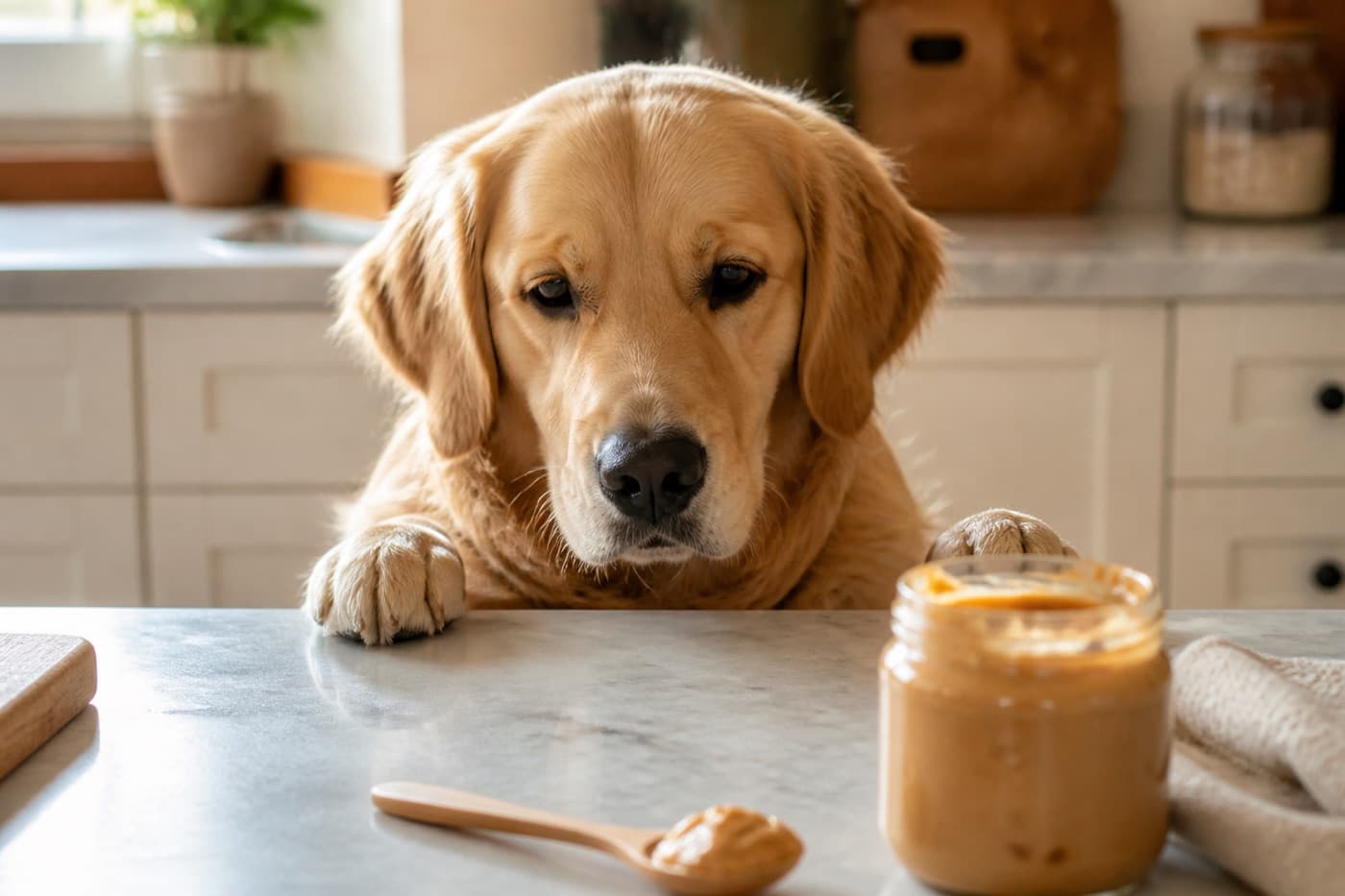
Yes, with a label check. AKC says most peanut butter can be an occasional treat when it does not contain xylitol. Plain, unsweetened peanut butter without that sweetener is the only version this page will discuss. No spoon-per-pound chart.
Xylitol turned some jars into an emergency. Read the ingredients before the dog gets a lick. If the jar already went down and xylitol is on the label, call.
AKC treats peanut butter as a protein-and-fat treat when it is plain and xylitol-free. Unsalted or dog-specific jars are the healthier pick. Extra sugar and salt are not a reason to scoop more.
This is still human food on top of a complete diet. A smear on a toy is different from a spoonful every night. Dogs with a pancreatitis history should not get a new fatty extra without the veterinarian who already manages that dog.
AKC’s health alert is clear: some peanut butters use xylitol. In dogs, that sweetener can drop blood sugar fast and become life-threatening. Weakness, staggering, collapse, and seizures are the signs owners are told to watch for. Do not wait for them if the label already lists xylitol.
“Sugar-free” is not a shortcut to safe. Read the full ingredient list every time you buy a new brand. If the dog ate a xylitol jar, call an emergency veterinarian with the brand, amount missing, time, and dog weight. Home emetics from a comment thread are not the plan.
Chocolate and grapes are separate toxin files. If the snack bowl mixed them with peanut butter, say every word on the call. See whether dogs can eat chocolate and whether dogs can eat grapes.
AKC’s language is moderation, not a daily topper. This page will not invent a serving by body weight. Keep any offer small, watch the next stool, and stop if the dog gets soft stool or seems off.
Avocado and onions are different pantry problems. Do not treat every leftover as peanut-butter rules. See whether dogs can eat avocado if that was the food on the counter.
AKC says most peanut butter is fine in moderation if it does not contain xylitol. Plain, unsweetened peanut butter without xylitol may be an occasional treat. Read every label. This page will not set a spoon-per-pound chart.
AKC warns that xylitol causes a rapid insulin release in dogs and a dangerous drop in blood sugar. Weakness, collapse, and seizures can follow. If the jar lists xylitol, do not share it. If the dog already ate some, call a veterinarian now.
Read the ingredient list every time, including “sugar-free” or “no sugar added” brands. Xylitol may also appear under other sweetener names. If you are unsure, do not offer that jar.
AKC prefers unsalted or dog-specific peanut butter when you offer any. High sodium and extra sugar are not a meal upgrade. Occasional still means occasional.
Many owners do, with xylitol-free peanut butter in a small smear. That is still a treat, not dinner. Dogs with pancreatitis history need the veterinarian who already manages that dog before new fatty extras.
Treat it as a xylitol emergency until a clinic says otherwise. Note the brand, how much is missing, the time, and the dog’s weight, then call. Do not wait for wobbling.
Reader notes are not veterinary advice. If an animal is unwell, call the veterinarian who sees them.
Be the first to leave a note on this guide.