ASPCA lists common garden roses as non-toxic to cats. Thorns, sprays, and true lilies in the same vase are the real emergencies.
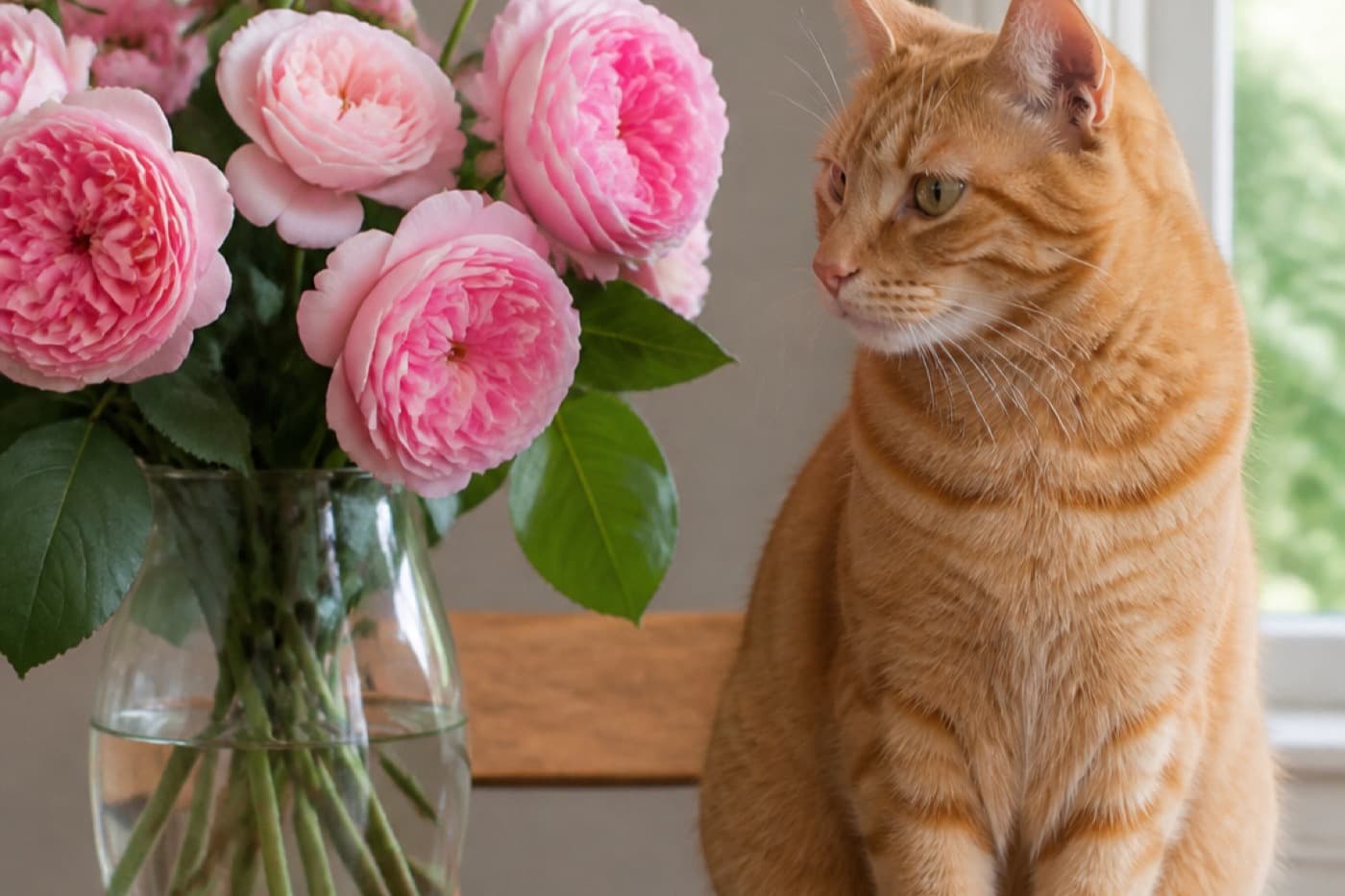
Common garden roses are listed as non-toxic to cats on ASPCA’s plant lists. That is not a snack invitation. Thorns cut. Sprays and flower-food packets poison. True lilies in the same bouquet are a kidney emergency.
Identify the plant before you relax. “Flower” is not a species. A photo of the leaf and bloom helps the hotline more than a guess.
ASPCA’s toxic and non-toxic plant lists treat common garden roses (Rosa species) as non-toxic to cats. “Non-toxic” means not a classic plant poison. It does not mean food. Petals can still upset a stomach. A cat that vomits once after a petal is not cleared by this paragraph.
If you are unsure it was a rose, treat it as unknown plant material and call. Bring a photo of the plant. ASPCA Animal Poison Control is 888-426-4435. Fees may apply. This page is the garden flower. Essential oils and concentrated products are a separate toxin class. Do not put rose oil on a cat. Ask the veterinarian or a poison hotline about any oil.
Punctures, insecticides, and flower-food packets are the usual rose-adjacent problems, not persin and not theobromine. A thorn in a paw or in the mouth needs a veterinarian, not a plant-toxicity chart. Systemic rose treatments on a bush the cat chews are a hotline problem. We will not invent a “rinse and wait” dose.
Flower-food packets, systemic insecticides, and dirty vase water are not “rose.” Tell the hotline exactly what was in the water. We will not invent a safe sip.
True lilies (Lilium and Hemerocallis) are a kidney emergency in cats. ASPCA and poison hotlines treat lily ingestion as urgent. Roses do not cancel that. If your bouquet has roses and lilies, the lily is what matters. Remove the whole arrangement from cat reach. If any lily part was chewed or the pollen is on fur, call now.
Peace lilies and calla lilies are different plants with different toxins. Still call. Do not sort the Latin name from memory while the cat is grooming pollen off a leg. Do not use this rose page as permission to keep lilies on the table.
After a nibble of what you think is a plain garden rose: photo the plant, note sprays and packets, and call if it might be a lily, if the cat is sick, or if you cannot identify the flower. Call an emergency veterinarian if the cat is already sick. You can also call ASPCA Animal Poison Control at 888-426-4435 or Pet Poison Helpline at 855-764-7661. Fees may apply. This page is editorial. It is not a diagnosis. See the about page for how we handle toxin claims.
ASPCA’s toxic and non-toxic plant lists treat common garden roses (Rosa species) as non-toxic to cats. Thorns still puncture. Pesticides and flower-food packets are a different poison problem. A nibble of petal is not the same emergency as a true lily.
For a plain garden rose with no spray and no packet, many cats only get a mild stomach upset. Call if the cat is drooling, vomiting a lot, or you are not sure what plant it was. Bring a photo of the plant. ASPCA Animal Poison Control is 888-426-4435. Fees may apply.
Yes. True lilies (Lilium and Hemerocallis) are a kidney emergency in cats. ASPCA and poison hotlines treat lily ingestion as urgent. Do not use this rose page as permission to keep lilies on the table.
Flower-food packets, systemic insecticides, and dirty vase water are not “rose.” Tell the hotline exactly what was in the water. We will not invent a safe sip.
This page is the garden flower. Essential oils and concentrated products are a separate toxin class. Do not put rose oil on a cat. Ask the veterinarian or a poison hotline about any oil.
The lily. Remove the whole arrangement from cat reach. If any lily part was chewed or the pollen is on fur, call now. The rose is the lesser problem in that vase.
Call an emergency veterinarian if the cat is already sick. You can also call ASPCA Animal Poison Control at 888-426-4435 or Pet Poison Helpline at 855-764-7661. Fees may apply.
Reader notes are not veterinary advice. If an animal is unwell, call the veterinarian who sees them.
Be the first to leave a note on this guide.