Licking can mean greeting, taste, or soliciting attention. Compulsive licking or skin injury needs a different plan.
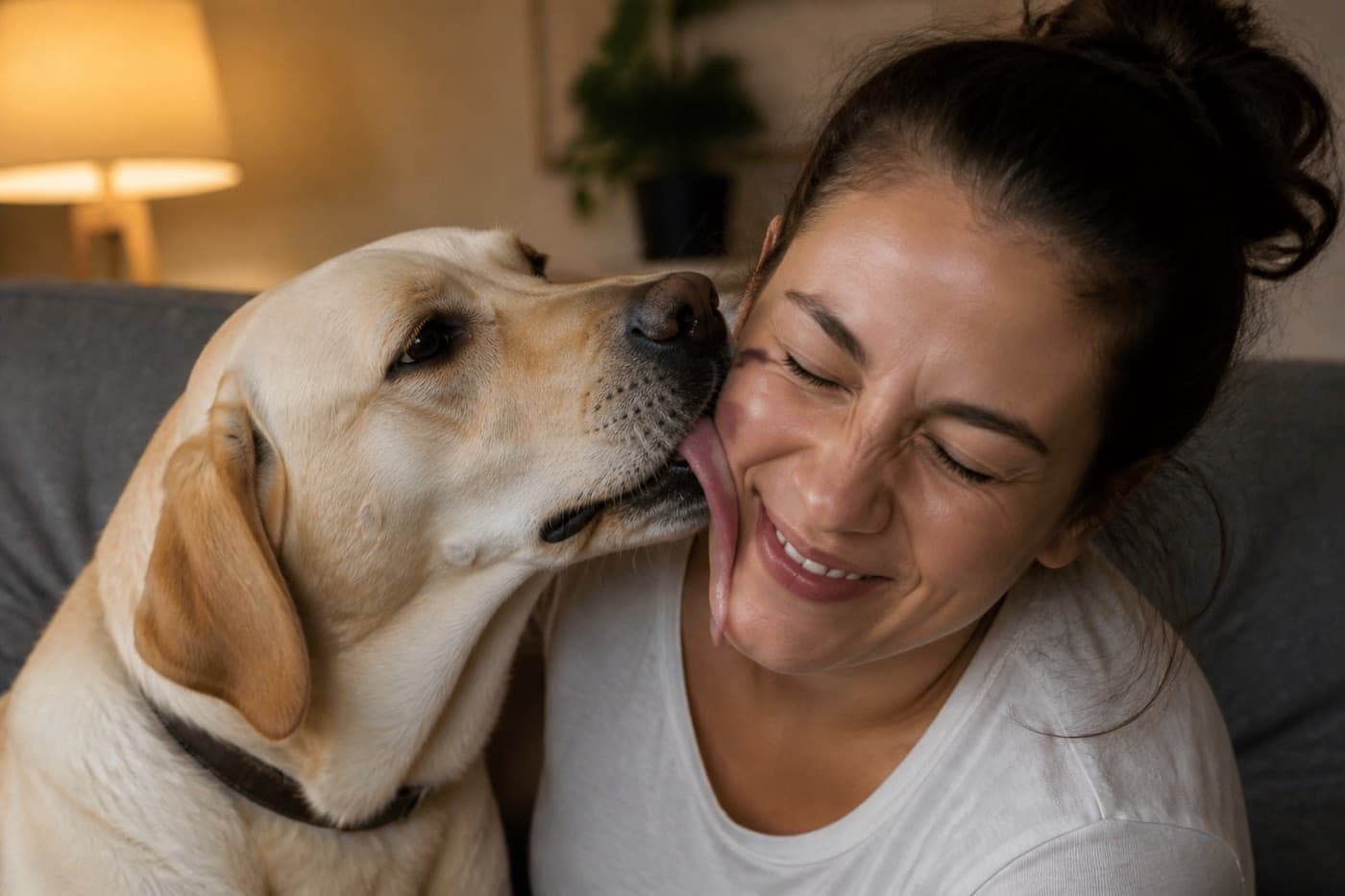
Dogs lick people to communicate. PetMD and AKC put affection, taste, scent, grooming leftovers, and attention on the same list. A few warm licks are usually bonding. Raw skin and nonstop focus are not.
Salt, lotion, and last night’s dinner on your fingers explain more than a soul theory. Watch the pattern, not the myth that every lick means eternal loyalty.
PetMD lists communication, affection, exploration, grooming, and attention as everyday reasons dogs lick people. Licking can also self-soothe. That is a wide file. It is not proof the dog is reading your emotions like a therapist.
Taste and scent do heavy work. Skin holds sweat and whatever you put on it. Food smells on hands invite a second pass. AKC’s feet page adds Jacobson’s organ language: dogs gather chemical information with mouth and nose together. Salt is appealing. Attention is reinforcing. You jump, you laugh, the lick becomes a game.
Cats have their own licking page. If the tongue on the couch belongs to a cat, start with why cats lick you. Species habits do not copy cleanly.
PetMD notes that different body parts can pull different motives. Hands carry scent and food residue. Faces carry social signals dogs already use with each other. Feet carry sweat and a loud owner reaction when the tongue lands.
Face licking is a hygiene choice. The mouth that investigated the yard is the same mouth. You can redirect to a toy. You do not need this page to invent a “never allow kisses” rule. You do need a physician for bites or broken skin, which is a human-medical question.
Excessive licking plus skin lesions, bald spots, or frantic focus on one patch of your skin is not “more love.” PetMD ties that intensity to anxiety, compulsive behavior, pain, allergies, and other medical concerns. AKC is clear that licking one of the dog’s own paws can hide a cut or bite; licking multiple paws can point to allergy or contact irritation. People skin that goes raw from the dog’s tongue needs the same seriousness.
Stop rewarding nonstop licking if you do not want more of it. That is training, not a diagnosis. Raw tissue, bleeding, or a dog that cannot settle without licking belongs to the veterinarian who sees that dog. Read how we handle behavior claims on the about page.
PetMD and AKC treat licking as communication: affection, grooming leftovers, taste and scent investigation, and attention-seeking. Salt on skin, lotion, and food smells explain a lot. A few licks and a wag is ordinary bonding, not a lab test.
No. PetMD lists exploration, self-soothing, and attention as other drivers. AKC notes submission and anxiety in the wider lick file. Context matters more than a single tongue swipe.
AKC’s feet page points to sweat, salt, and scent information, plus a fast attention loop when you react. Occasional foot licking is common. A nonstop habit may need training boundaries, not a myth about “love languages.”
Excessive licking that creates raw skin, hair loss, or obsessive focus on one spot is a different file. PetMD ties heavy licking to anxiety, compulsive behavior, pain, allergies, and other medical concerns. The veterinarian who sees that dog sorts it.
You decide. The mouth that just cleaned a yard is the same mouth. Face licking is a hygiene choice, not a veterinary requirement. Skip it if anyone in the house is immunocompromised, and ask your physician if you are unsure.
Cats lean harder on social grooming and a shorter petting budget that can end in a bite. Dogs lean harder on taste, scent, and attention loops. For the cat version, see why cats lick you. Do not reuse one species page for the other.
Taste and scent drive a lot of “sudden” licking. Wash the product off if the licking is frantic. If the dog then drools or acts odd, that can be a toxin call, not a bonding moment. ASPCA Animal Poison Control is 888-426-4435 (fees may apply).
Reader notes are not veterinary advice. If an animal is unwell, call the veterinarian who sees them.
Be the first to leave a note on this guide.