Burying toys and treats is a caching instinct. Boredom and resource guarding can amplify it. Training beats scolding.
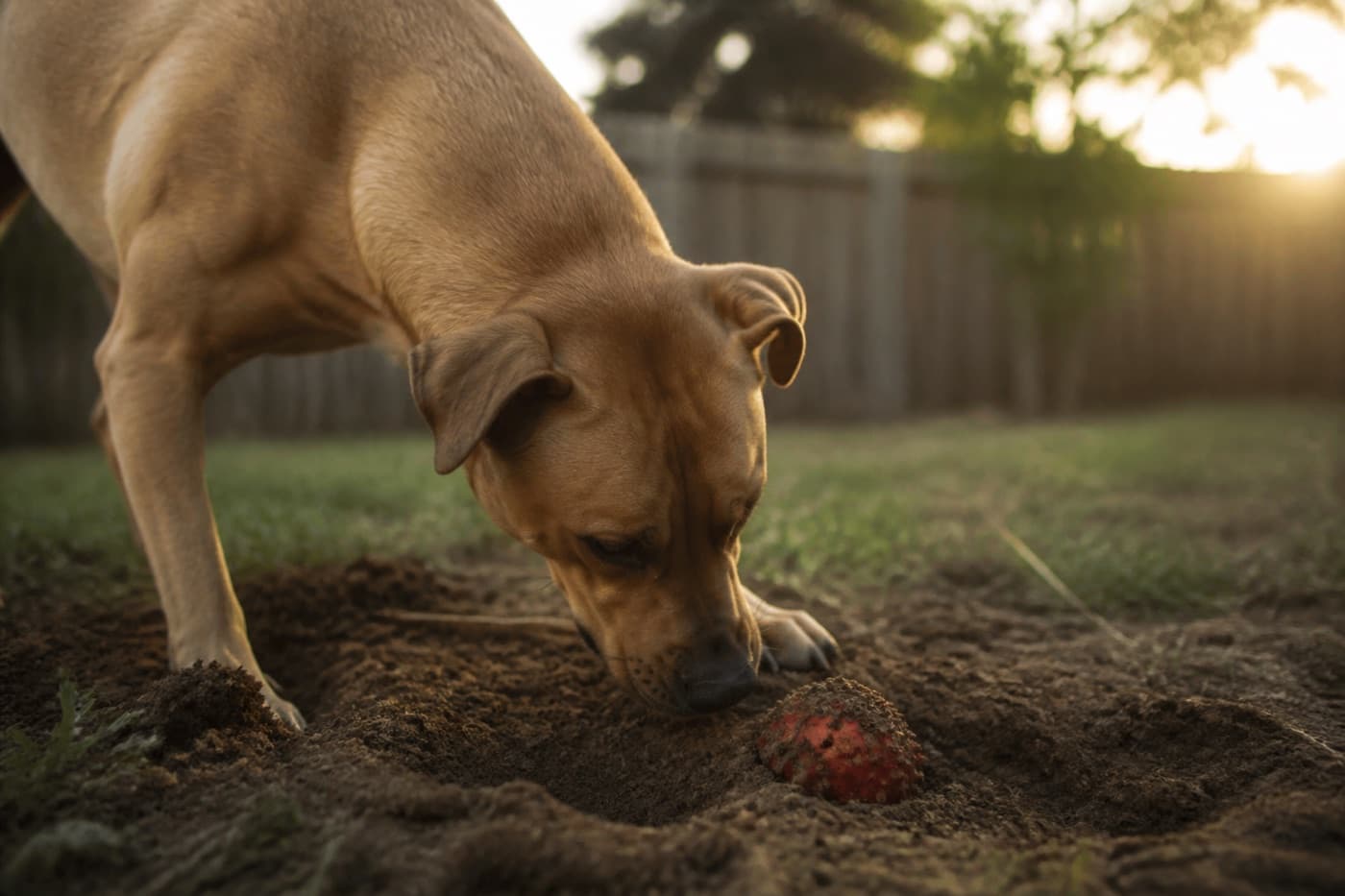
Burying is caching leftover, not spite. AKC links the habit to ancestors who hid surplus meat from sun and thieves. Your couch cushion is just a modern dirt pile.
A bone under the hosta is instinct. Growling when you approach the hole is a different file called resource guarding. Keep them separate.
AKC’s bury-bones page retells the feast-or-famine story: wild canids gorged when they could, then buried what would not fit. Dirt slows spoilage and hides the meal from scavengers. The stash is a pantry. Your Dachshund still runs the program on a Tuesday chew.
That leftover does not mean the dog is underfed. It means the sequence is old. AKC is explicit that daily meals do not erase the instinct. Calling it spite adds a motive the sources do not print.
Soft cushions and mulch beds are easy dig sites. AKC’s hiding page frames stashing as protecting valued items from other pets, the same way a safe holds valuables. Surplus makes the habit worse: too many toys, too many chews, too many places to disappear them.
Management they describe is boring and effective. Rotate toys. Offer a chew when the dog is already full. Supervise in a room with nowhere to bury. Hunting-breed owners may see more of it. Treat that as tendency, not destiny.
Caching hides. Guarding threatens. A dog that quietly tucks a toy under a blanket is not the same dog that freezes, growls, or snaps when a hand comes near. AKC notes anxiety and competition with other dogs can sit under possessive hiding. That still does not make burying “revenge.”
Do not stage a tug-of-war over a buried bone to teach a lesson. Ask the veterinarian who sees that dog for a behavior referral if guarding appears. This page will not invent a confrontation protocol. Read how we handle behavior claims on the about page.
AKC treats burying as a caching leftover from feast-or-famine ancestors: hide surplus food from sun and scavengers, dig it up later. Modern dogs still stash toys and chews in couches and gardens. It is instinct, not a plot against your flower beds.
No. AKC’s hiding guidance calls it nature, not naughtiness. The dog is protecting a valued item, not punishing you for leaving for work. Spite is a human story we will not paste onto a garden hole.
The instinct outlasts the need. AKC notes domestic dogs still hoard even on a reliable meal schedule. Surplus toys make burying more likely. Rotate a few items instead of leaving a pile.
AKC says owners of hunting breeds seem to see more burying, as a tendency tied to resource-saving instinct. It is not a diagnosis and not a reason to skip training management.
No. Caching hides an item for later. Resource guarding is stiff body language, growling, or snapping when someone approaches a possession. Guarding needs a behavior plan from the veterinarian or a qualified trainer. Do not mix the files.
AKC suggests reducing surplus: fewer toys out at once, chews after a meal when the dog is already full, and supervised chew time in a room with nowhere to stash. We will not invent a dig-proof garden protocol.
That is guarding layered on caching. Keep people and other pets away from the stash and call for a behavior workup. Do not reach into the hole to “win.” Safety first.
Reader notes are not veterinary advice. If an animal is unwell, call the veterinarian who sees them.
Be the first to leave a note on this guide.