Tail wags signal arousal, not only joy. Direction, height, and body tension change the meaning. Read the whole dog.
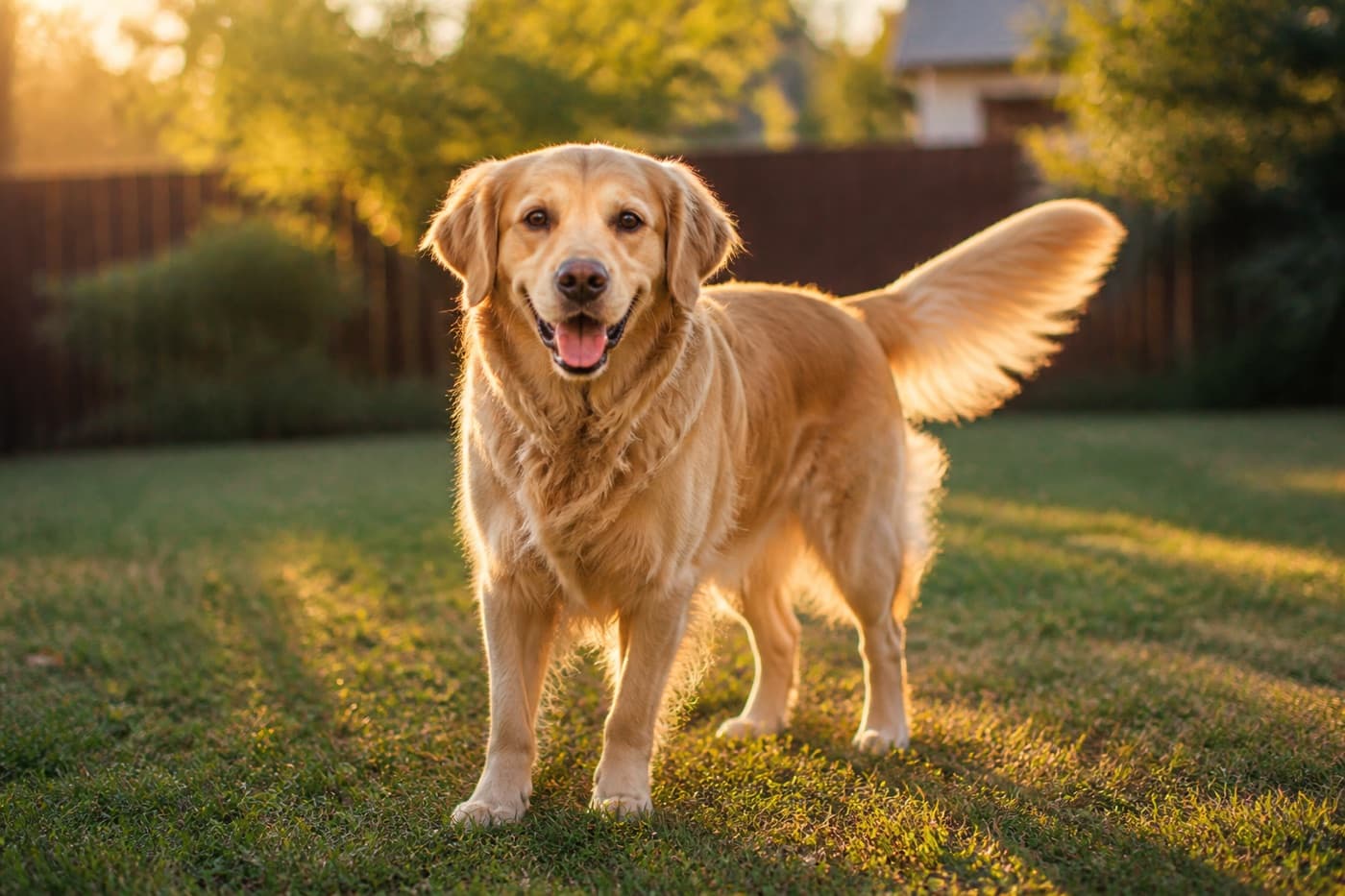
A wag is communication, not a happiness stamp. AKC treats the tail as a mood barometer: position, speed, and the rest of the body matter. A stiff high wag can be tension. A loose whole-body sweep is a different story.
“The tail moved, so I pet the dog” is how park bites start. Read the whole silhouette before you reach.
AKC’s wag page opens with the myth: wagging does not always mean friendly and approachable. Stanley Coren’s line they quote compares a moving tail to a human smile, nod, or polite greeting: a visual signal, not a single emotion. Dogs see motion well. Other dogs read the flag. People often stop at “it moved.”
Arousal is the better first word. Excitement, uncertainty, and conflict can all move the tail. Pair the wag with a play bow and soft eyes, or with a rigid body and a hard stare. Those are not the same invitation.
AKC body-language guidance: basically, the faster the wag, the more aroused the dog. Long, slow, side-to-side sweeps that move the hips often read relaxed. A faster, twitch-like wag can be higher arousal, including in a negative way. Think guard dog on alert, not greeting card.
Height is the assertiveness dial they describe. Tail tucked or low: fear or stress. Tail held up like a flag: confidence that can tip into aggression. A stiff high wag is the pattern this page wants owners to respect. Do not invent a breed exception that erases it.
Direction research AKC cites (Current Biology work) links more right-sided wagging with positive contexts and more left-sided wagging with negative ones. Keep it as a footnote. In the moment, stiffness, height, and whether you can leave matter more than counting which side leads.
A slammed door, a stepped-on tip, or a dog that suddenly will not sit is not a body-language puzzle. Tail trauma is pain. Bleeding, a limp hang, chewing at the base, or a dog that snaps when the rear is touched belongs at the veterinarian.
This page will not invent a first-aid chart for broken tails. It will say: wagging is social data until the tail is injured, then it is a clinic day. Read how we handle YMYL claims on the about page.
Not always. AKC treats the wag as communication and emotional arousal, not a guaranteed smile. A loose, sweeping wag with a soft body often reads friendly. A stiff, high, fast wag can mean tension or assertiveness. Look at the whole dog.
AKC body-language guidance: the higher the tail, the more assertive the dog may feel. A fast, twitch-like wag can signal high arousal that is not friendly. Do not pet a stiff, flag-high stranger on the strength of “the tail moved.”
AKC lists a low or tucked tail with fear, anxiety, or stress. A slow wag can mean uncertainty. Pair that with ears, mouth, and whether the dog can leave the situation.
AKC cites research that right-leaning wags often pair with more positive situations and left-leaning wags with more negative ones. Useful as a science note. Not a reason to stand still in front of a stiff dog while you count sides.
Tail trauma is a veterinary problem: pain, bleeding, a limp hang, or a dog that suddenly guards the rear. Do not wait to see if the wag “comes back.” Call the clinic that sees that dog.
Breed shape changes how easy the signal is for people to read. The dog still has emotion and other body cues. Rely more on face, posture, and movement when the tail is short or tightly curled.
AKC describes a circular “helicopter” wag as a happy greeting pattern in many dogs, especially with a beloved person. Still watch the rest of the body. One friendly pattern does not clear every dog in the park.
Reader notes are not veterinary advice. If an animal is unwell, call the veterinarian who sees them.
Be the first to leave a note on this guide.