Dogs can guard attention, toys, and space. Calling it jealousy is shorthand. Training and safety matter more than labels.
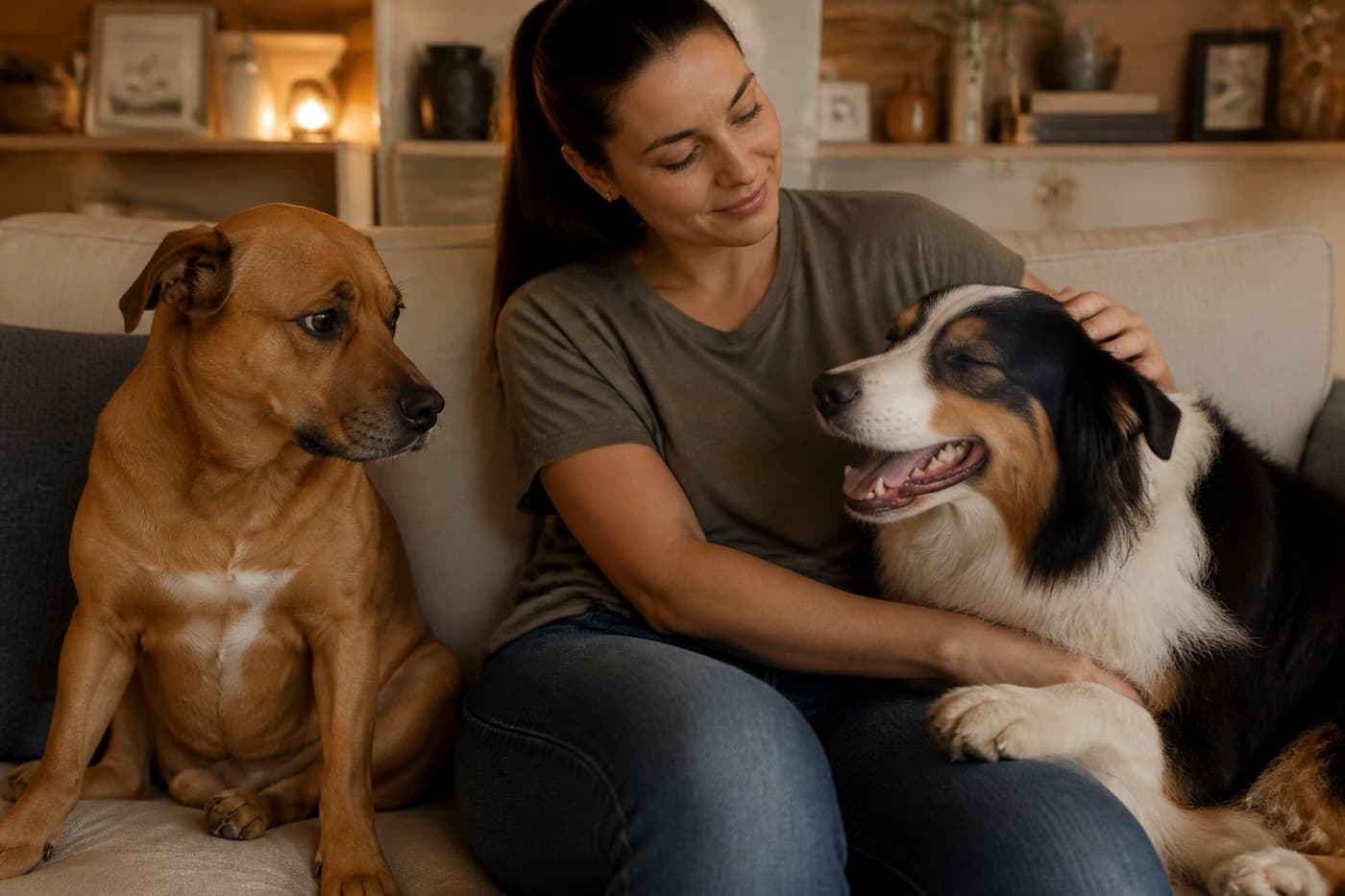
What owners call jealousy is often resource guarding or attention-seeking. AKC discusses social emotions in dogs and notes they are not as complex as human jealousy. VCA names possessive aggression when a dog protects food, toys, resting places, or a favored person.
A shove between you and a guest is a behavior to manage. It is not proof the dog is writing a novel about your marriage. Sudden aggression needs a veterinary check before a pop-psych label.
AKC reviews studies on fairness and social emotions. Dogs notice when a partner is rewarded and they are not. They are less like humans obsessing over whether the treat is equal. “Jealousy” in the pop-psych sense is a weak training label.
VCA’s aggression material includes possessive aggression: the dog grows stiff, stares, growls, or snaps when someone approaches a coveted item or companion. Food-bowl aggression pages call that resource guarding. People can be the resource. So can a couch, a bone, or a lap.
Attention-seeking looks softer: pawing, barking, wedging in without a freeze or growl. Guarding looks harder. Sort the picture before you punish. A growl is information. Removing the growl with scolding can leave you with a quieter dog that bites sooner.
VCA’s food-bowl guidance starts with safety and management: feed apart, pick up bowls after meals, keep high-value chews for supervised or alone time, and keep children from approaching a dog that is eating. The same idea applies when the “resource” is you. Reward calm when a person or dog approaches. Do not rehearse a fight over the lap.
If the dog already growls, snarls, snaps, or lunges, get a veterinary behavior professional before DIY “show them who is boss” drills. This page will not publish a confrontation protocol. Management reduces rehearsals while you get a plan.
For howling that owners also misread as drama, see why dogs howl. Noise and guarding are different files. Treat each with the right tools.
New, sharp guarding of a person or object after years of soft sharing is a veterinary visit first. Pain, dental disease, ear trouble, and cognitive change can shrink tolerance. Rule out medical causes before you buy a jealousy story.
Keep people and other pets safe while you wait for the appointment. Separate feeding and rest spaces. Do not reach for a guarded item. Tell the clinic what changed and when. Pop-psych jealousy does not clear a painful mouth.
AKC discusses research on fairness and social emotions in dogs, and notes that “jealousy” in dogs is not as complex as human jealousy. What owners often mean is attention-seeking or resource guarding of a person, toy, or food. Label the behavior, then train for safety.
It can look like it. VCA treats aggression around valued items or companions as possessive aggression, often called resource guarding. The dog is protecting access to you or another resource. That is a training and management problem, not a soap-opera diagnosis.
VCA’s food-bowl aggression page defines it as aggressive behavior near a valuable resource: food, toys, resting places, or a favored person. Staring, freezing, growling, or snapping are communication. Ignoring those signals can escalate to bites.
Do not punish growls away and invent a dominance fight. Manage triggers: separate feeding, remove high-value items the dog guards, reward calm when a rival approaches. For growling, snapping, or lunging, get a veterinary behavior consult. This page will not publish a DIY confrontation plan.
Sudden aggression is a veterinary visit first. Pain, illness, and sensory changes can look like “personality.” Rule out medical causes before you buy a pop-psych jealousy label.
No. Adding a rival without a plan can make guarding worse. Introduce dogs with professional guidance if you add one at all. Two bowls and two beds are management, not magic.
AKC summarizes research where dogs care whether work is rewarded at all, more than whether the treat is equal. Do not use human envy vocabulary as a training plan. Watch what the dog does when attention or food is shared.
Reader notes are not veterinary advice. If an animal is unwell, call the veterinarian who sees them.
Be the first to leave a note on this guide.