Dogs see better than people in dim light, not in total darkness. Tapetum and rod density help. Sudden night bumping needs a check.
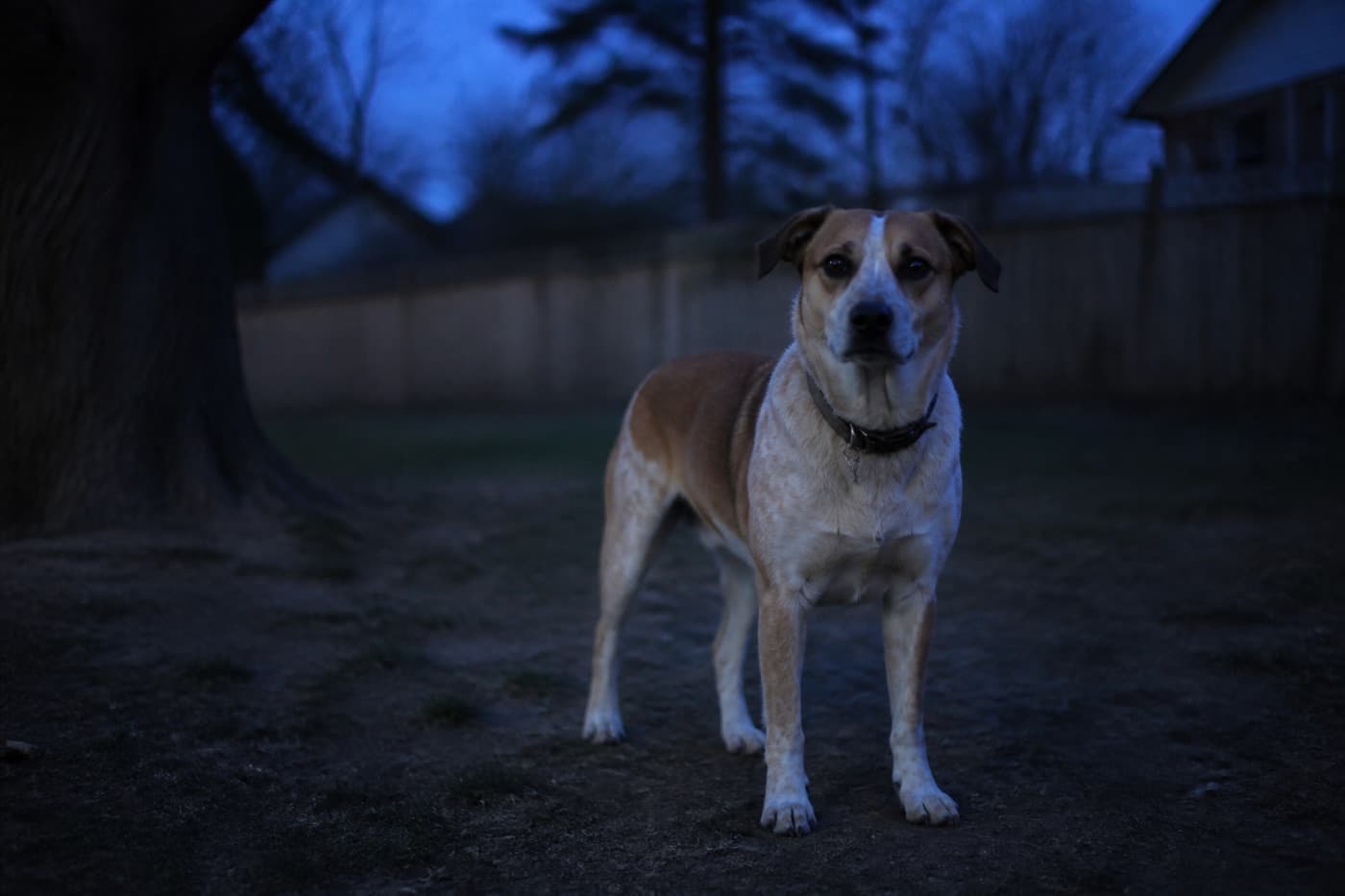
Dogs see better than people in dim light. They do not see in pitch black. AKC and VCA credit the tapetum lucidum and a retina built for low light. A sealed basement with zero photons is still dark for a dog.
Eye shine in headlights is leftover reflection, not a flashlight the dog aims at the hallway. A night light helps. Infrared myths do not.
AKC says dogs beat humans at seeing movement and light in the dark and other low-light situations. Larger pupils, more rods, and the tapetum all help. That is twilight and hallway-with-streetglow skill. It is not a claim that dogs invent light when the room is sealed.
Take the dog out at night and they often alert to objects sooner than you do. Smell helps. So does a retina that spends the photons that are already there. A closet with the door shut is still not a cinema.
Cats share the same dim-light story with their own numbers. For that page, see whether cats can see in the dark.
AKC calls the tapetum lucidum a reflective layer behind the retina that acts like a mirror. Light that passes the retina gets bounced back for a second chance. That magnifies sensitivity in low light. People do not have one. The eerie greenish-yellow glow in photos or headlights is that reflection leaving the eye.
VCA’s glow explainer matches the mechanism: tapetum as shining layer, useful for twilight and night movement, shared with cats and many other animals. Some dogs, often blue-eyed, lack a tapetum and may show red-eye from blood vessels instead. Glow color can change in the first months of life.
None of that hardware creates photons. It spends the light already in the room. Eyes that glow are not a flashlight.
AKC’s vision pages separate the jobs: rods and tapetum for dim light and motion; cones for color. Dogs see fewer colors than most people (yellows and blues) and still win at dusk. A red toy on green grass can vanish for dichromatic reasons even at noon. That problem lives on are dogs color blind, not on this night page.
Sudden night bumping, cloudy eyes, or a dog that stops navigating a familiar hall is a veterinarian visit. Dim light skill is lifelong anatomy. A new miss is disease until proven otherwise. Read how we handle YMYL claims on the about page.
Better than people in dim light, not in true pitch black. AKC and VCA credit the tapetum lucidum and a rod-heavy retina. Zero light is still zero light. A night light helps navigation; it is not infrared vision.
A reflective layer behind the retina. Light that misses the rods gets a second pass. AKC and VCA both describe that mirror effect. The glow in headlights or flash photos is leftover reflection leaving the eye.
VCA and AKC: incoming light bouncing off the tapetum. Color can look green, blue, orange, or yellow. Some blue-eyed dogs lack a tapetum and may show red-eye from blood vessels instead.
Both use a tapetum and rod-rich retinas. Cat pages often cite a larger dim-light advantage than dogs. For the feline version, see whether cats can see in the dark. This page stays with canine hardware.
Those are different axes. Color is cones; night vision is rods and the tapetum. Dogs are dichromats strong on blue and yellow. Dim-light skill does not erase the red-green limit. See are dogs color blind for the cone story.
A small light helps in an otherwise black house. It does not give the dog night-goggles. AKC is clear dogs beat us in low light and still need some light to work with.
Lifelong dim-light skill does not explain a new miss. Sudden vision change is a veterinarian visit, not a brighter bulb experiment. Color limits and tapetum anatomy are lifelong; a new bump is a different file.
Reader notes are not veterinary advice. If an animal is unwell, call the veterinarian who sees them.
Be the first to leave a note on this guide.