Ham is not toxic but it is cured, salty, and fatty. The bone is often the more urgent half of the question.
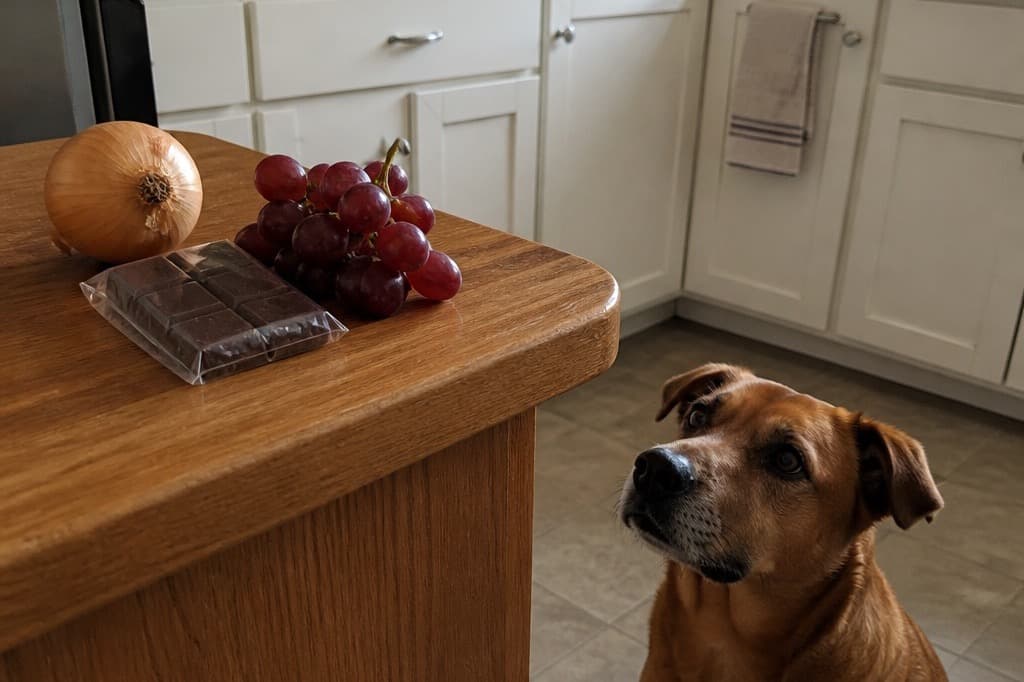
Not recommended. Ham is not on any toxin list, but it is one of the saltiest and fattiest things that reaches a dog from a dinner table. AKC puts fatty scraps in the pancreatitis file.
The bone is often the bigger problem than the meat. Both belong in the same answer.
Ham is cured, which means sodium well beyond anything in a complete dog food. High salt drives thirst and urination, and in large amounts it is a genuine clinical problem rather than a mild one.
The fat is the part that sends dogs to clinics after holidays. AKC and Merck both connect sudden fatty meals to acute pancreatitis, and dogs with a previous episode are the ones most at risk.
Cooked bones are brittle. A ham bone splinters into shards that can lodge in the throat, tear the gut wall, or block the intestine. That is an obstruction and perforation risk, not a chewing treat.
If a dog has taken a ham bone, call rather than watching. Retching without producing anything, drooling, straining, a hunched back, or black tarry stool all mean go now.
A single slice of plain ham in a healthy adult dog is usually a watch. Make sure water is available, drop the rest of the day’s treats, and keep the next two meals plain.
Call if the dog vomits more than once, will not settle, refuses food, or stands with its front down and rear up. That posture is a belly pain signal.
If the dog cleared a whole board, name everything on it. Cheese and bread come with their own answers — see whether dogs can eat cheese and whether dogs can eat bread.
It is not recommended. Ham is not toxic, but it is cured, salty, and fatty, which makes it one of the more common triggers for pancreatitis and excessive thirst after a holiday meal.
Salt and fat. Curing loads ham with sodium, and the fat content is high enough that AKC treats fatty table scraps as a pancreatitis risk rather than a treat.
One slice in a healthy adult dog is usually not an emergency. Offer water, skip the next treat, and watch for vomiting or a hunched posture over the next day.
No. Cooked bones splinter, and ham bones are a classic cause of obstruction and perforation. This is often the more urgent half of the question.
Worse, not better. Glazes add sugar, smoking adds more salt, and spice rubs often carry onion and garlic powder.
Repeated vomiting, a painful or hunched belly, refusing food, and lethargy after a fatty meal. Merck treats it as a condition needing veterinary care, not home management.
Reader notes are not veterinary advice. If an animal is unwell, call the veterinarian who sees them.
Be the first to leave a note on this guide.