Many dogs tolerate a small piece of plain cheese. Fat, lactose, and flavored add-ins decide whether it stays a treat.
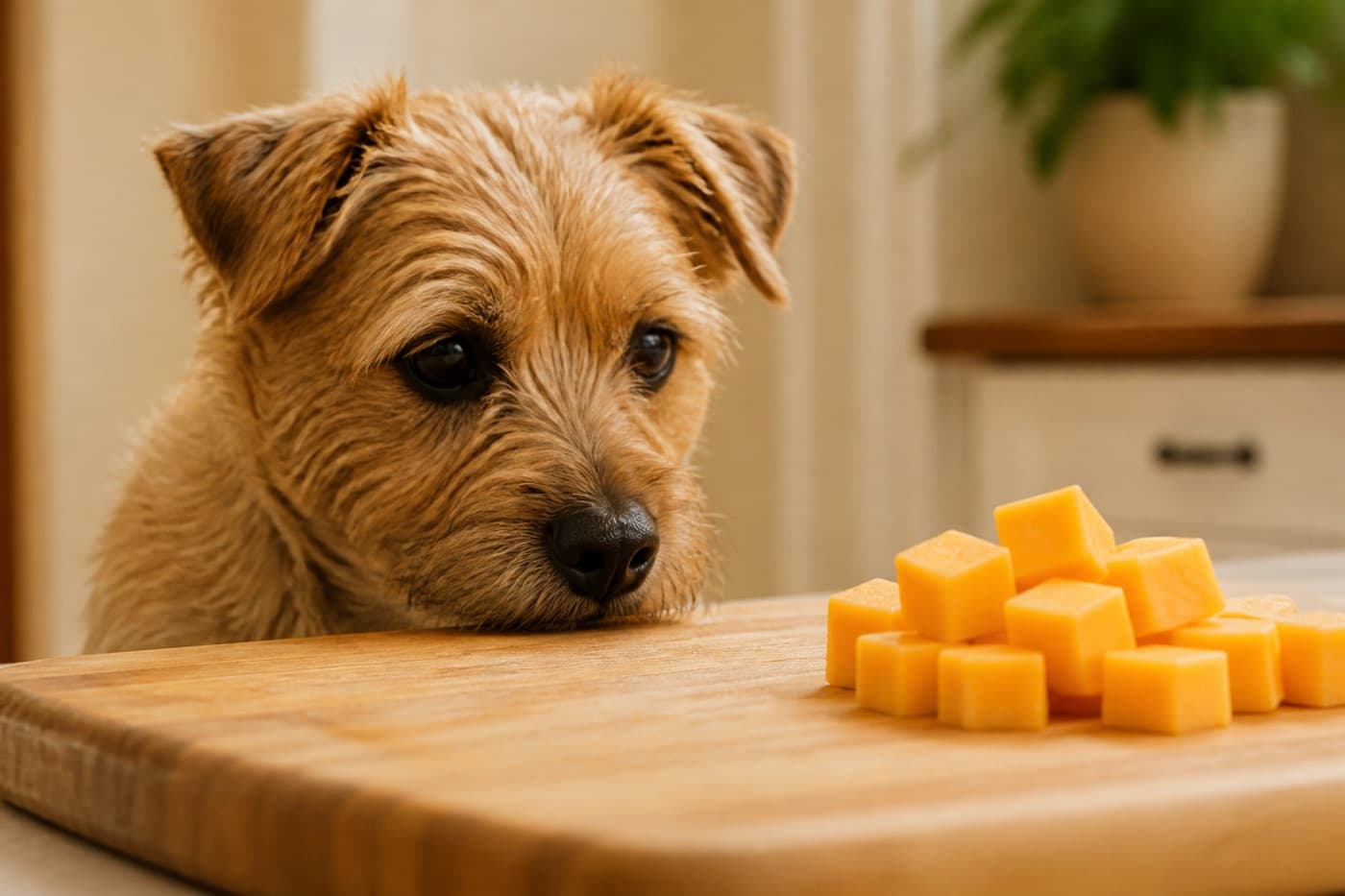
AKC says cheese can be an occasional small treat for many dogs. Many dogs are lactose intolerant. Cheese is high in fat. That is the whole permission this page will give. No cube-per-pound chart.
A counter block disappearing is how “a little cheese” becomes a lot. Count what is missing before you shrug it off as a training treat.
AKC’s treat language is small amounts of cheese as an occasional extra. It is not a meal and it is not a daily topper. Plain cheese is the conversation. Seasoned cubes are a different risk file.
If you offer any, keep it tiny and watch the next stool. Soft stool or gas means stop. This page will not invent a serving by body weight.
Many dogs handle lactose poorly. Gas, diarrhea, and vomiting after dairy are common. That is intolerance, not a puzzle to solve with a bigger cube next time.
Cheese is also rich. Dogs with a pancreatitis history should not get a new fatty extra without the veterinarian who already manages that dog. Painful belly, repeated vomiting, or a dog that will not settle after a cheese raid is a clinic day.
Peanut butter is another fatty treat with its own label check. See whether dogs can eat peanut butter.
Onion and garlic powders show up in flavored cheeses and snack mixes. Those are toxin problems, not cheese debates. See whether dogs can eat onions.
Chocolate and grapes do not become safer because cheese was also on the board. Say every food on the call. See can dogs eat chocolate and can dogs eat grapes when those were in the same snack.
AKC says many dogs can have cheese in small amounts as an occasional treat. Many dogs are lactose intolerant. Cheese is high in fat. This page will not set a cube-per-pound chart.
Lactose intolerance is common. Soft stool, gas, or vomiting after dairy is a stop sign. High-fat cheese also worries dogs with a pancreatitis history.
Lower fat may be gentler for some dogs, but it is still an occasional extra. Ask the veterinarian who sees that dog if cheese is already on a restricted list.
Ask the veterinarian who sees that puppy first. Small guts and new dairy often mean soft stool. We will not invent a weaning-age cheese chart.
Flavored cheeses can hide onion or garlic. Those are separate toxins. See the onion guide and skip the flavored cube.
Fat and lactose can cause gastrointestinal upset. If vomiting repeats, the dog seems painful, or you know that dog has pancreatitis risk, call the clinic now. Do not wait for a homemade ranking of “how much cheese is fine.”
Reader notes are not veterinary advice. If an animal is unwell, call the veterinarian who sees them.
Be the first to leave a note on this guide.