Cats should not eat chocolate. Pet Poison Helpline and ASPCA on theobromine. Cats steal less than dogs. That is luck, not a dose chart.
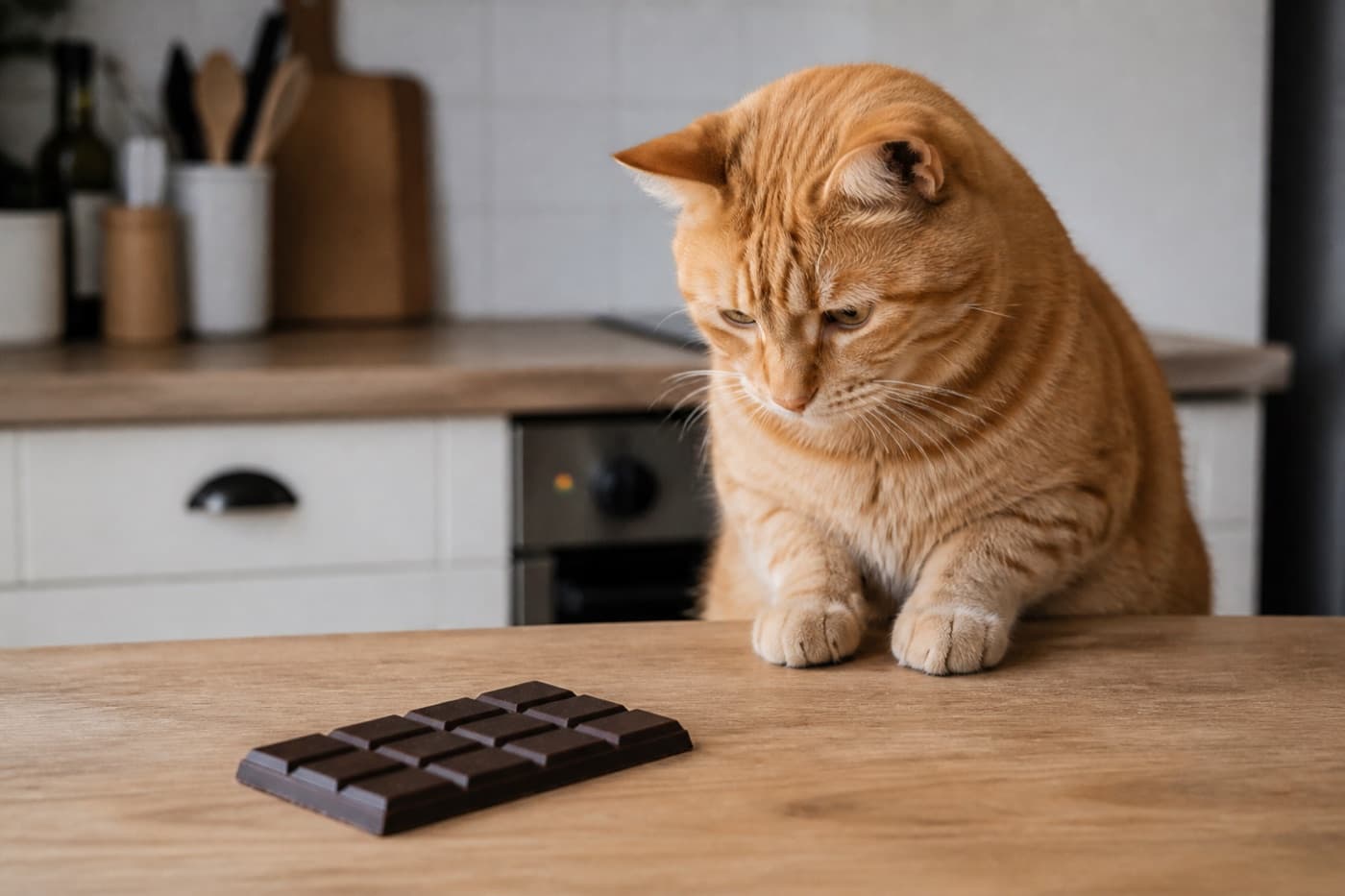
No. Cats should not eat chocolate. Pet Poison Helpline and ASPCA treat theobromine and caffeine as toxins in cats. Darker, more bitter chocolate carries more of both. Cats often steal less than dogs. That is luck, not a free pass.
Write the type, a weight estimate of what is missing, the time, and the cat’s weight, then call. We do not publish a homemade safe dose.
Theobromine and caffeine stimulate the heart and the nervous system. Cats clear those methylxanthines poorly. That is a toxin problem, not a treat debate. Pet Poison Helpline and ASPCA treat chocolate as toxic to cats for the same methylxanthine reasons owners hear about in dogs.
Cornell’s canine chocolate page is the mechanism many veterinarians quote: vomiting, restlessness, a racing heart, tremors. Cornell lists a possible sign window of 2 to 12 hours on the dog page. Use that as urgency for cats, not as a cat dose table. Dose math belongs to the veterinarian or the hotline.
Cocoa powder and baker’s chocolate sit at the top of veterinary concern lists. Milk chocolate has less theobromine. White chocolate has very little and is still not food. It is still fat and sugar, and wrappers can hide xylitol.
Cocoa mulch, hot-cocoa mix, and dark baking bars are pantry items, not “less chocolate.” Read the wrapper for xylitol, raisins, or other stacked toxins. One call should cover the whole dessert, not three separate guesses. If the thief was a dog, use the dog page: can dogs eat chocolate. Do not reuse a dog leftover story for a cat.
Remove what is left. Note the type, a weight estimate of what is missing, the time, and the cat’s weight. Call an emergency veterinarian. You can also call ASPCA Animal Poison Control at 888-426-4435 or Pet Poison Helpline at 855-764-7661 (fees may apply). Have the product name ready.
Do not give salt, peroxide, or milk from a comment thread. Cats are not dogs, and home emetics injure. The veterinarian decides decontamination. Cats hide. “She looks fine” is a weak clearance. A lick is still ingestion. Absence of vomiting is not a pass.
Hotlines already do the arithmetic. A blog chart would read like permission. This page will not publish one. “Cats don’t like chocolate” and “I’ll use the dog calculator and divide by four” are homemade math. Say raisins or xylitol first if they were on the same wrapper. Houseplants can be the other cat emergency in the same week. If the problem was a bouquet, see whether roses are toxic to cats.
No. Pet Poison Helpline and ASPCA treat chocolate as toxic to cats because of theobromine and caffeine. Cats are even less able to clear those methylxanthines than dogs. Darker chocolate is worse. We do not publish a homemade safe dose.
Lick is still ingestion. Cats often eat less than dogs, which is luck, not clearance. Call with the type, a guess at amount, the time, and the cat’s weight. Absence of vomiting is not a pass.
White chocolate is low in theobromine. It is still fat and sugar, and wrappers can hide xylitol. Treat it as a call if a small cat ate a lot, or if other toxins were in the same dessert.
Veterinary toxin pages list vomiting, restlessness, a fast heart, tremors, and seizures. Signs can lag. Do not wait for the worst one. Cornell’s dog chocolate page uses a 2 to 12 hour window for possible signs. Cats need the same urgency on the phone.
No. Cats are not dogs, and home emetics injure. The veterinarian decides decontamination.
Say that first. Raisins are a kidney problem in dogs and a concern in other pets. Xylitol is a separate emergency. One call should cover the whole wrapper.
Call an emergency veterinarian. You can also call ASPCA Animal Poison Control at 888-426-4435 or Pet Poison Helpline at 855-764-7661. Fees may apply.
Reader notes are not veterinary advice. If an animal is unwell, call the veterinarian who sees them.
Be the first to leave a note on this guide.