Adult cats commonly lose lactase. Cow milk often means diarrhea. Water and a complete cat diet stay the better default.
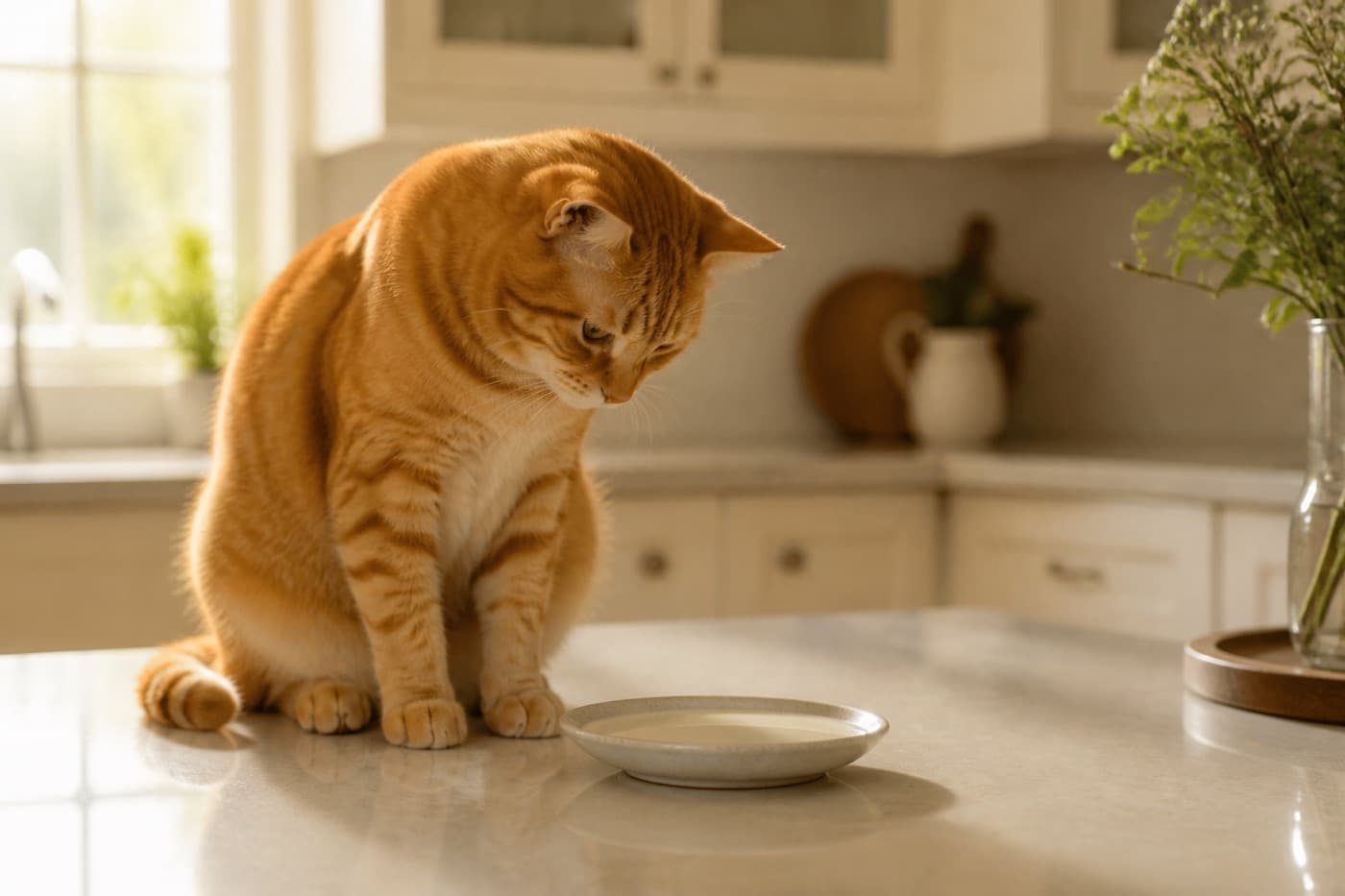
Adult cats often cannot handle cow’s milk. PetMD says no as a habit. VCA says cats do not need milk, and most lose lactose digestion by about 12 weeks of age. Kitten milk replacer is a different product. This page will not push a saucer.
Soft stool after cream is the common story. Water is still the drink. We will not invent a teaspoon chart that reads like permission.
Kittens digest queen’s milk. As they wean, many make less lactase, the enzyme that breaks down milk sugar. PetMD explains the rest: undigested lactose pulls water into the intestines and feeds gas-making bacteria. Diarrhea, gas, and vomiting can follow within about half a day of a dairy product.
VCA puts the timing around 12 weeks for most kittens losing lactose digestion. Small amounts may be tolerated. Too much milk leads to intestinal upset. “She always had milk” is not a lab clearance. It is often luck plus a small splash.
PetMD’s second problem is fat and sugar. Cow’s milk adds calories cats often do not need. Regular saucers tip an otherwise complete diet out of balance. VCA’s feeding guidance is blunt: contrary to popular belief, kittens and adult cats do not need milk. Fresh water should always be available.
Dogs have a parallel lactose story. See whether dogs can drink milk if the thief was the other pet. Do not reuse a dog leftover story for a cat. Chocolate in the same dessert is a toxin file: can cats eat chocolate.
Orphaned or underfed kittens need a formula made to mimic cat milk. PetMD names purpose-made kitten milk supplements and warns that cow, sheep, and goat milk are the wrong recipe. Dog milk replacer is also wrong for kittens. VCA says consult your veterinarian for appropriate milk replacement if a very young kitten is not yet on solid food.
That product is not a treat for adult cats. It is a nursery tool. Adult dairy from the fridge stays off the menu for most households. Call if diarrhea is hard, if the cat cannot keep water down, or if a small kitten emptied a large carton.
PetMD’s short answer is no for cow’s milk as a habit. VCA says cats do not need milk, and by about 12 weeks most lose the ability to digest lactose well. Adult cats are often lactose intolerant. Water stays the drink.
Often yes. PetMD and VCA explain that lactase drops after weaning. Undigested lactose pulls water into the gut and can mean diarrhea, gas, and vomiting. A cartoon saucer is not proof of tolerance.
That is a different product. VCA and PetMD point orphaned or nursing-support kittens toward formulas made for cats, not cow’s milk from the fridge. Dog milk replacer is also the wrong recipe for kittens. Ask the veterinarian who sees that litter.
Some cats tolerate a teaspoon better than others. Fat and sugar still unbalance the diet if milk becomes regular. PetMD still advises against making it a habit. Soft stool after dairy is your stop sign.
PetMD says oat, soy, almond, and coconut milks are not a good idea as a routine drink either. This page will not invent a plant-milk chart. Keep water available.
Stop dairy. Keep water available. If the cat is bright and drinking, call your regular clinic for the next step. Blood, repeated vomiting, or a kitten that cannot keep fluids down is a same-day visit.
Reader notes are not veterinary advice. If an animal is unwell, call the veterinarian who sees them.
Be the first to leave a note on this guide.