True lilies and daylilies can cause kidney failure in cats. Pollen, petals, and vase water count. Call a veterinarian now.
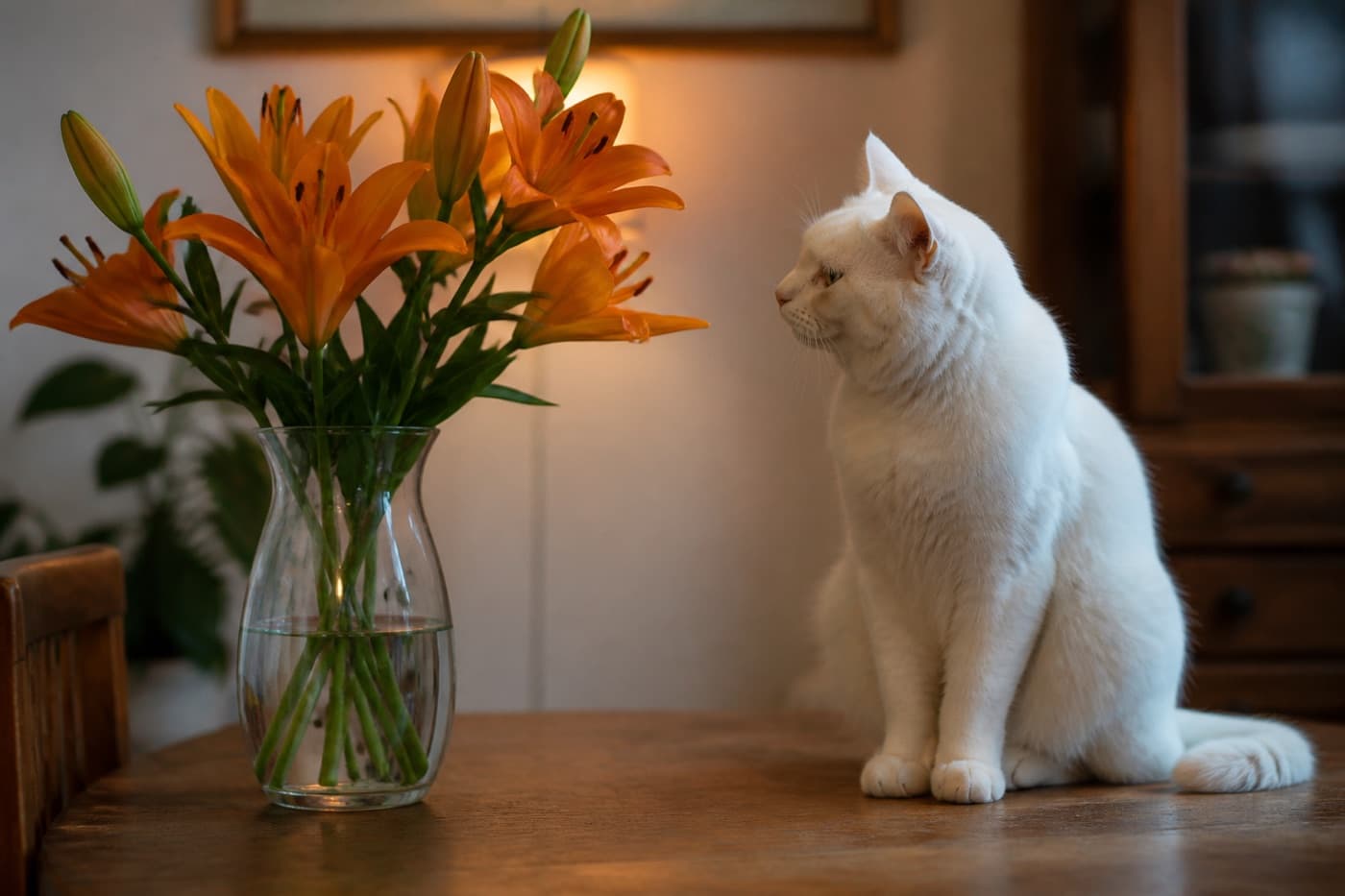
True lilies and daylilies are a kidney emergency in cats. ASPCA, Pet Poison Helpline, PetMD, and VCA treat Lilium and Hemerocallis exposure as call-first. Petals, pollen, and vase water count.
Identify the plant. “Lily” on a grocery tag is not a species. If you are unsure, call anyway.
True lilies (Lilium species: Easter, Asiatic, Stargazer, tiger, and related hybrids) and daylilies (Hemerocallis) can cause acute kidney failure in cats. ASPCA’s poison-control writing is blunt: a small piece of leaf or petal, pollen licked off fur, or vase water can be enough. PetMD and VCA say the same. The exact toxin is not fully identified. The clinical file is still kidney failure.
VCA notes kidney injury can develop within hours of exposure. PetMD describes early signs that can begin within about two hours and worsen toward fatal kidney failure in less than 72 hours without care. Those windows are urgency, not a wait-and-see chart. Dogs that nibble may get stomach upset without the same kidney story. Cats are the species at risk.
Remove access to the plant. Note the time, what was chewed or groomed, and the cat’s weight. Call an emergency veterinarian. You can also call ASPCA Animal Poison Control at 888-426-4435 or Pet Poison Helpline at 855-764-7661 (fees may apply). Bring a photo or the plant.
Do not give peroxide, salt, or milk from a comment thread. The veterinarian decides decontamination and fluids. “She looks fine” is a weak clearance. Cats hide. Early treatment improves prognosis. Delay past the early window is how these cases turn fatal on toxin pages.
Peace lilies and calla lilies are not true lilies. VCA says they cause mouth pain from oxalate crystals, not the Lilium kidney failure pattern. Peruvian lilies (Alstroemeria) may cause mild stomach upset. Lily of the valley is a heart-toxin plant, still not a snack. If the label only says “lily,” treat it as unknown and call.
Common garden roses are listed as non-toxic to cats on ASPCA plant lists. Thorns and flower-food packets are still problems. If the bouquet mixed roses and true lilies, the lily is the emergency. Contrast page: are roses toxic to cats. Do not keep true lilies in a cat house to decorate a holiday table.
This page is editorial. It is not a diagnosis. See the about page for how we handle toxin claims.
Yes. True lilies (Lilium) and daylilies (Hemerocallis) can cause fatal kidney failure in cats. ASPCA, Pet Poison Helpline, PetMD, and VCA all treat exposure as urgent. Petals, leaves, pollen, and vase water count.
Call first. Contact an emergency veterinarian. You can also call ASPCA Animal Poison Control at 888-426-4435 or Pet Poison Helpline at 855-764-7661 (fees may apply). Bring a photo or the plant. Do not wait for vomiting.
No. VCA says peace lilies and calla lilies are not true lilies and do not cause the same kidney failure. They can still cause mouth pain and drooling from oxalate crystals. Still call if you are unsure which plant it was.
Roses are a different file. ASPCA lists common garden roses as non-toxic to cats. If the vase also held true lilies, the lily is the emergency. See whether roses are toxic to cats.
Yes. ASPCA, FDA summaries, PetMD, and VCA warn that pollen licked off fur, or a sip of vase water, can be enough. Treat grooming after contact as exposure.
Veterinary toxin pages describe early vomiting and appetite loss within hours, with kidney injury following. Exact timing belongs to the clinic. Early treatment improves odds. Delay is dangerous.
No. Cats are not dogs, and home emetics injure. The veterinarian decides decontamination.
Reader notes are not veterinary advice. If an animal is unwell, call the veterinarian who sees them.
Be the first to leave a note on this guide.