Anal scent glands carry identity information dogs read up close. Scooting, odor, or pain can mean gland trouble.
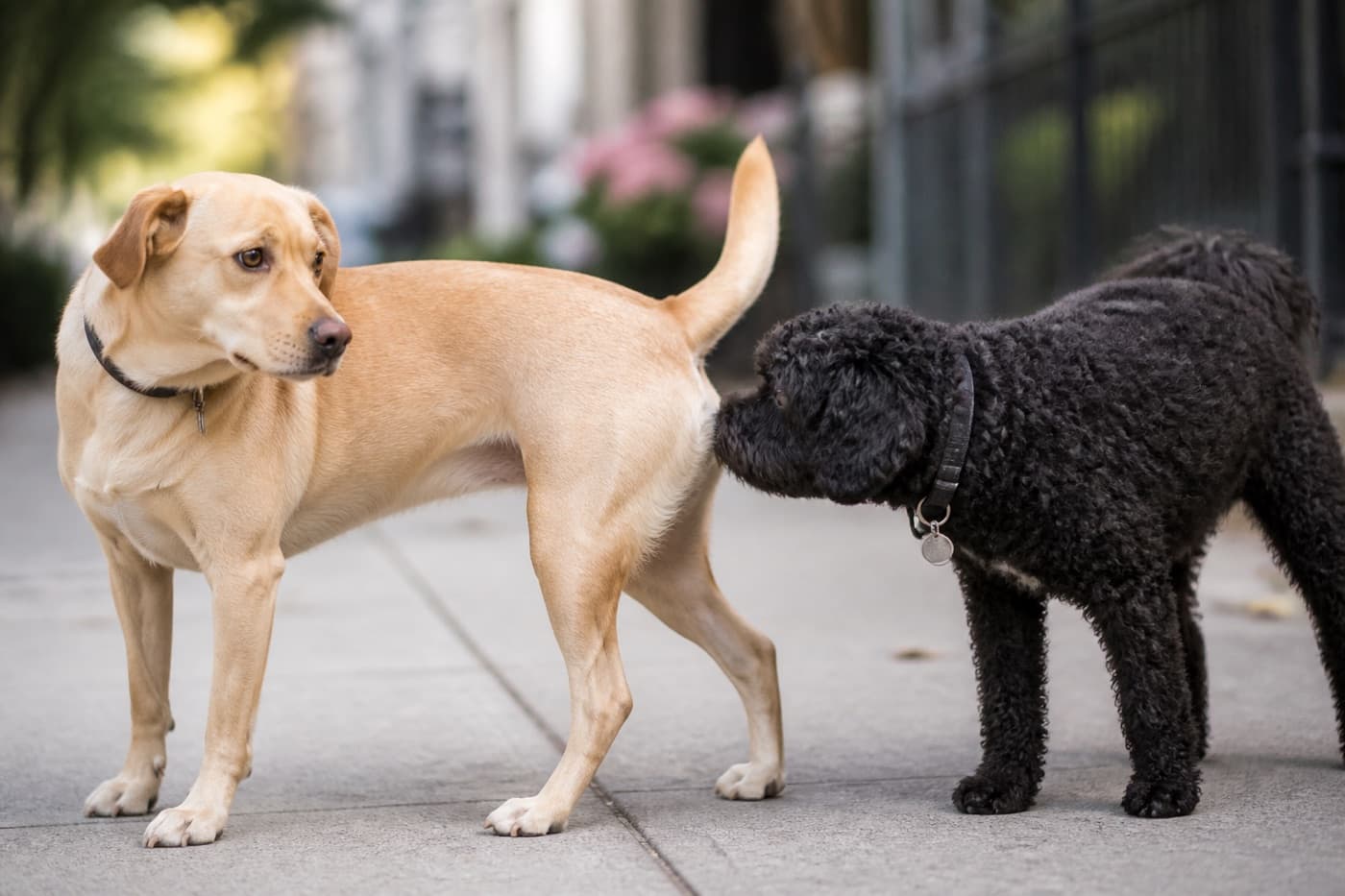
Butt sniffing is scent communication. AKC and VCA point to anal glands: small sacs that store a strong, individual odor dogs read like a profile. A quick sniff is information, not a joke the internet invented.
Scooting and nonstop licking under the tail are a different file. That pattern often means the glands hurt. Call.
Dogs greet with noses. AKC’s sniff-butts page puts anal sac secretions at the center: a cocktail of compounds other dogs investigate under the tail. VCA’s smell pages add how much social data arrives through odor, including Jacobsen’s organ for chemical signals people barely notice.
A brief mutual sniff is ordinary park etiquette in dog terms. If the other dog looks tense, pinned, or tucked, AKC says move on. Force-sniffing is not required for “socialization.”
VCA describes two pouches at roughly four and eight o’clock around the anus. Glands lining the sacs make a foul fluid that marks feces during a normal stool and can spray when a dog is frightened. AKC matches that picture: territorial scent, identity information, and an involuntary empty under stress.
The fishy smell owners hate is the same signal dogs find informative. That does not mean every fishy couch is “just greeting.” Leakage and disease smell the same category of fluid.
VCA lists scooting or dragging the rear, plus licking or biting near the tail base, as early anal sac disease signs. Rupture can mean blood or pus. The area is painful. Even gentle dogs may snap if you touch it. AKC’s gland page says get to the veterinarian rather than letting scooting shred the skin.
Scooting plus lick is the line this page will not soften. Do not express glands from a tutorial if you have not been shown how. Do not assume worms from a meme. Book the clinic that sees that dog. Read how we handle YMYL claims on the about page.
AKC and VCA treat rear-end sniffing as scent communication. Anal gland fluid carries a strong, individual chemical signature. A quick sniff is a canine hello, richer than a handshake for a nose-first species.
VCA and AKC describe two small sacs beside the anus that store foul-smelling fluid. Normal stools often express a little. Fear can empty them suddenly. The scent is information, not a grooming failure.
Not in dog terms. AKC calls it a normal greeting. Still watch the other dog: tucked tail, stiff body, or pinned ears means end the sniff and give space. Consent is body language, not a human etiquette rule.
Scooting plus licking under the tail often points to anal sac discomfort: impaction, infection, or related irritation. VCA and AKC want a veterinary exam. Scooting is not a cute quirk to ignore.
Parasites can irritate the rear, but anal sac disease is a common scoot cause in the pages we cite. Guessing “just worms” from a video wastes time. Let the veterinarian check both possibilities.
Not from this page. Improper squeezing can injure tissue. If scooting, licking, or a fishy odor is new, book the clinic that sees that dog. They decide whether expression, medication, or further care is needed.
AKC notes anal gland fluid has a strong fishy smell. Leakage, expression after fear, or sac disease can perfume the couch. Persistent odor with scooting or licking is a veterinary visit, not a new shampoo experiment alone.
Reader notes are not veterinary advice. If an animal is unwell, call the veterinarian who sees them.
Be the first to leave a note on this guide.