A few snow licks are common in winter. Ice melt, antifreeze, and yellow snow are the hazards. Water bowls still matter.
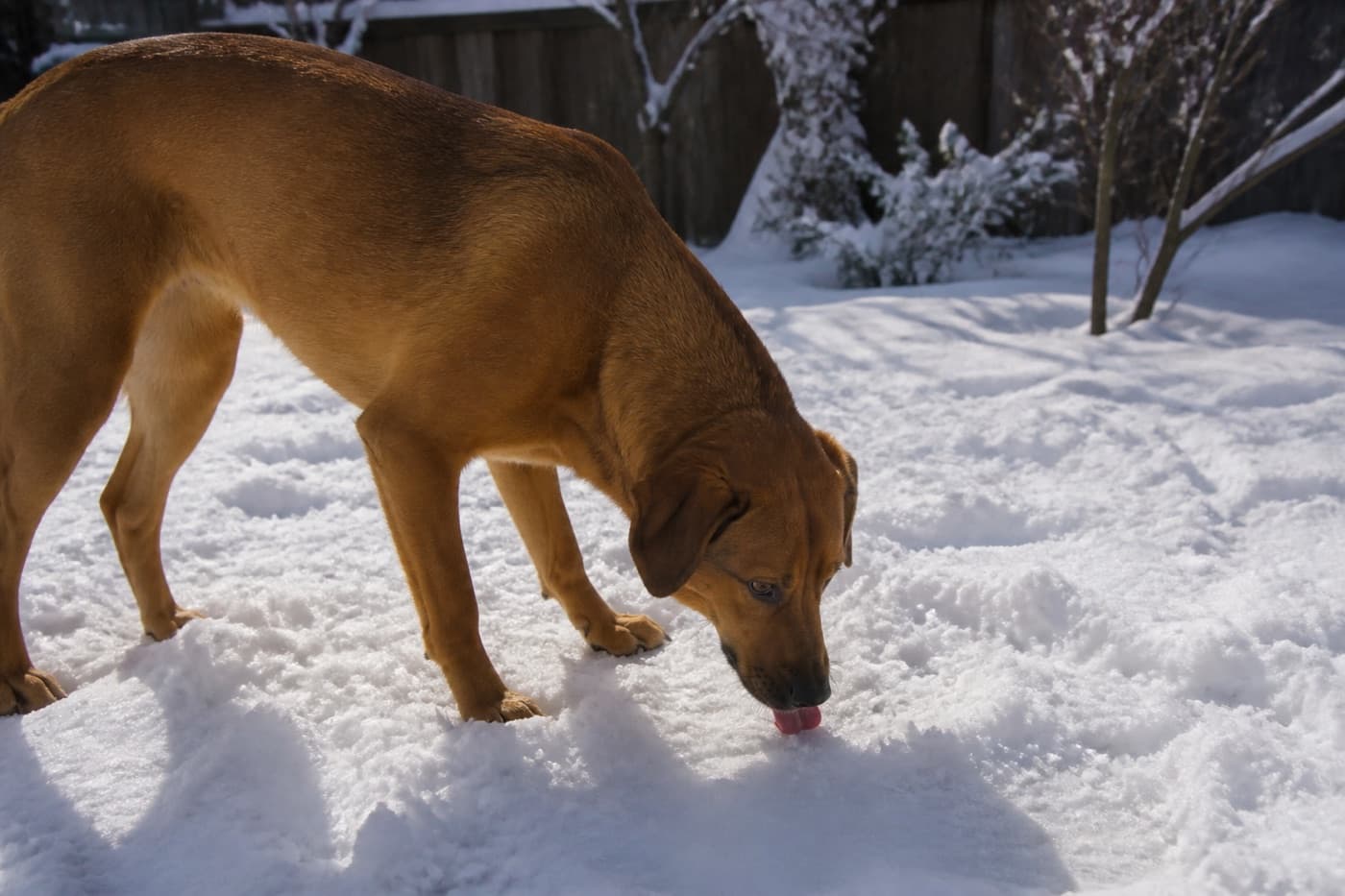
Small amounts of clean snow are common. Treated snow is not a snack. Curiosity and play explain most mouthfuls. Ice melt and antifreeze turn a winter walk into a poison call. Yellow snow stays a no.
Snow is not a hydration plan. Keep a water bowl indoors. Count what the dog licked on the curb before you call it “just weather.”
Dogs mouth snow while they play. The cold texture is novel. A few clean bites on a fresh bank are the ordinary picture. That is not the same file as gulping plow piles from a salted curb.
Steer away from yellow snow and from dirty roadside berms. Trash, sticks, and sharp ice hide under soft powder. If the dog vomits after a big session or seems chilled and slow, end the play and warm up indoors with water available.
ASPCA’s winter ice-melt page says pets often meet melt chemicals by licking paws after a treated walk, or by eating snow that holds the product. Stomach upset is the common problem. Bigger ingestions can raise sodium and lead to tremors or seizures. Some formulas irritate the mouth. Wipe paws when you get inside. Do not let dogs eat salt or slushy treated snow.
Antifreeze is a different emergency. AKC and PetMD treat ethylene glycol as highly toxic. Dogs may drink it because it tastes sweet. Even small amounts can damage kidneys. Spills in driveways and garages matter. Licking paws after walking through a drip matters. If antifreeze is possible, go to emergency care now. Say the product name if you have it.
Do not wait for “looking fine.” Early treatment windows are short. Home remedies from a comment thread are not a plan.
Fresh water in a bowl still wins in winter. Snow is mostly frozen water, but gulping it is a poor substitute and can chill a dog that already ran hard. Offer water before and after outdoor play.
Compulsive snow eating plus new thirst, weight change, or lethargy belongs on a veterinary exam. Occasional play bites do not clear a medical workup. If grass eating is the other seasonal habit you are sorting, see why dogs eat grass.
Curiosity, play, and a cold texture are common owner explanations. Small amounts of clean snow are widely treated as ordinary. Snow is not a hydration plan. Keep fresh water indoors.
Small amounts of clean, untreated snow are usually treated as low concern. ASPCA warns against snow and slush that may hold ice melt. AKC and PetMD treat antifreeze as an emergency. Yellow snow is a no.
ASPCA’s ice-melt page says pets can ingest melt chemicals by licking paws or by eating treated snow. Stomach upset is common. Larger ingestions can raise sodium and cause tremors or seizures. Wipe paws after walks and call if you worry about amount.
That is an emergency now. AKC and PetMD treat ethylene glycol antifreeze as highly toxic even in small amounts. Do not wait for “looking fine.” Go to an emergency veterinarian and say antifreeze.
No. Melting snow in the stomach is a poor hydration strategy and can chill a dog that already worked hard outside. Offer room-temperature water before and after play.
Urine-marked snow is not a treat. It can carry waste and whatever else landed in that spot. Steer the dog to clean banks away from curb piles and plow rows.
Occasional mouthfuls during play are common. Compulsive gulping, plus other changes in thirst or appetite, deserves a veterinary visit. Do not invent a diagnosis from snow alone.
Reader notes are not veterinary advice. If an animal is unwell, call the veterinarian who sees them.
Be the first to leave a note on this guide.