Circling before rest is a common nesting habit. Sudden urgency, pain, or endless spinning changes the meaning.
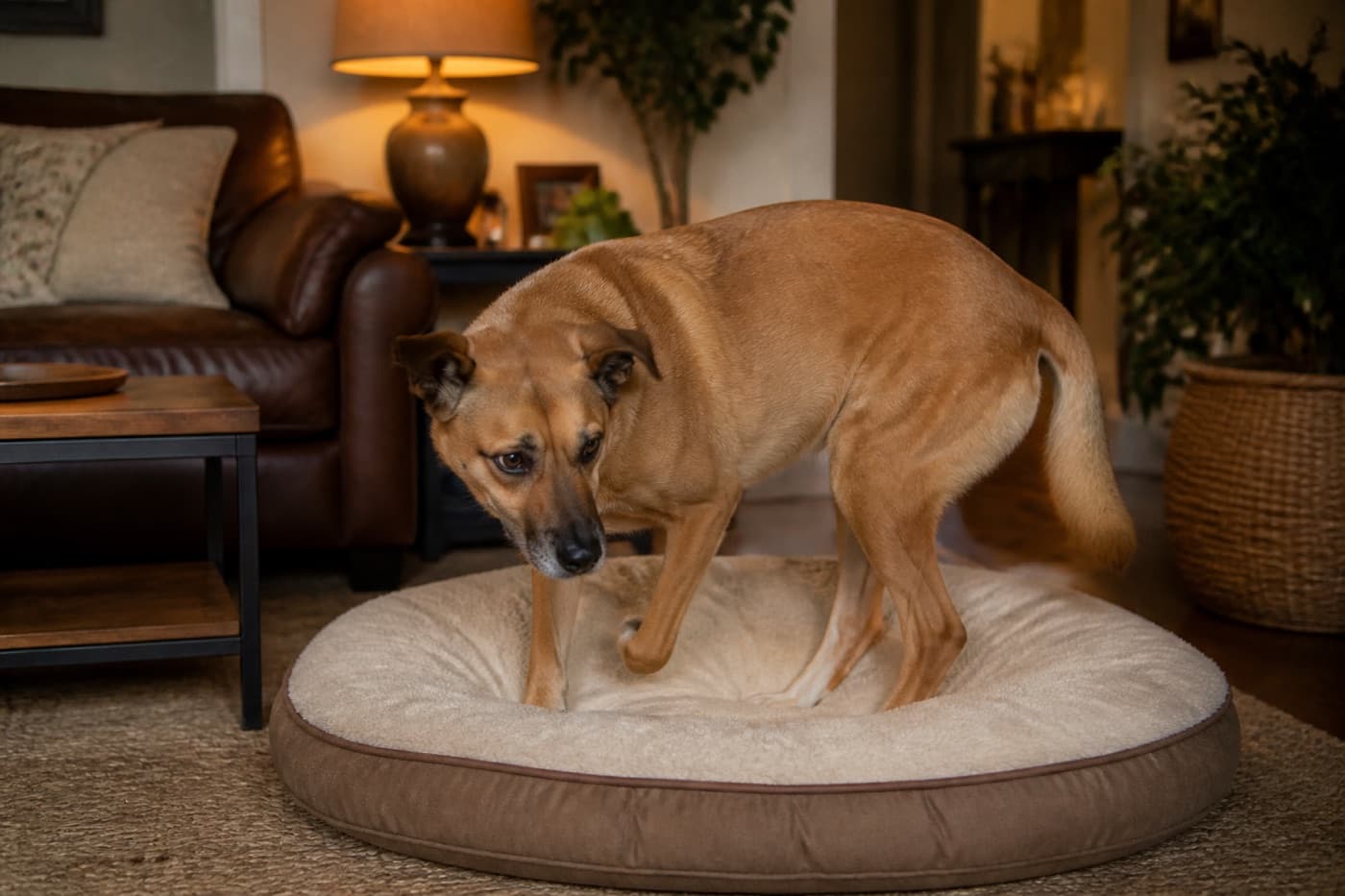
Circling before a nap is usually nesting leftover. AKC links those turns to arranging grass or blankets and checking the spot. A few circles and a sigh is ordinary. Endless, painful spinning is not.
Soft beds get more fluff-and-turn than bare tile. That is comfort, not spite. Watch for the night the ritual stops working.
AKC’s material on spinning before elimination explicitly compares the habit to turning before a nap: the dog may be getting blankets exactly the way it wants. In the wild-canid story they retell, footsteps flatten dirt or grass into a smoother nest and give a last look for pests. Domestic dogs still run the sequence on a living-room rug.
That is a fixed-action leftover, not a moral failure and not proof the dog is “anxious about everything.” A short ritual that ends in sleep is the picture you want. We will not invent a magnetic-field chart.
Uneven soft surfaces invite more arranging. Scratching the blanket, circling twice, and dropping is the same denning instinct AKC discusses when dogs dig beds or crates. Hard floors often get fewer turns because there is less to shape.
If the digging wrecks flooring, give a bed that can take claws or supervise the settle. Boredom digging in the yard is a different problem from three pre-nap spins. Keep the files separate.
New painful circling, panting, crying, limping, or lying down only to pop up and spin again is orthopedic or medical until proven otherwise. Joint pain makes the last fold to the floor hard. Cognitive decline can keep a senior walking the same path without a settle. Vestibular disease can look like circling that never becomes a nap.
Call the veterinarian who sees that dog. Do not add a harder bed and wait. This page is editorial nesting context, not a limp diagnosis. Read how we handle YMYL claims on the about page.
AKC treats pre-nap circling as a nesting leftover: flattening grass or bedding, checking the spot, arranging blankets. A few turns and a settle is ordinary. It is not a superstition about “finding magnetic north.”
Yes for most dogs. AKC’s Family Dog material links turning before a nap to getting bedding the way the dog wants it, and to older canid nesting habits. Soft surfaces often get more arranging than hard floors.
Same nesting file. Scratching and circling often travel together while the dog shapes a den-like spot. Provide a bed that can take it, or redirect digging that destroys flooring. This page will not invent a dig-hours chart.
New, painful circling that never ends in a settle, especially with panting, limping, crying, or repeated stand-ups, is orthopedic or neurologic work. Call the veterinarian. Do not wait for “one more spin.”
No. Nesting spins are brief and end in a lie-down. Vestibular circling is often one-direction walking with a head tilt, falling, or jerking eyes. That cluster needs a clinic, not a fluffier bed. See also why dogs tilt their heads.
Seniors can have joint pain, cognitive change, or balance disease behind restless spinning. New duration plus panting or failure to settle is an exam, not “old dog quirks.”
Not if it is brief and comfortable. Blocking a hardwired settle ritual can add stress. Address pain if the ritual turns into frustration. Ask the veterinarian who sees that dog before you add a device.
Reader notes are not veterinary advice. If an animal is unwell, call the veterinarian who sees them.
Be the first to leave a note on this guide.